Permafrost is exactly what it sounds like - perpetually frozen ground. Specifically, soil or rock that has stayed at or below 0°C for at least two consecutive years. In some parts of the Arctic and Siberia, the permafrost has been frozen continuously for tens of thousands of years.
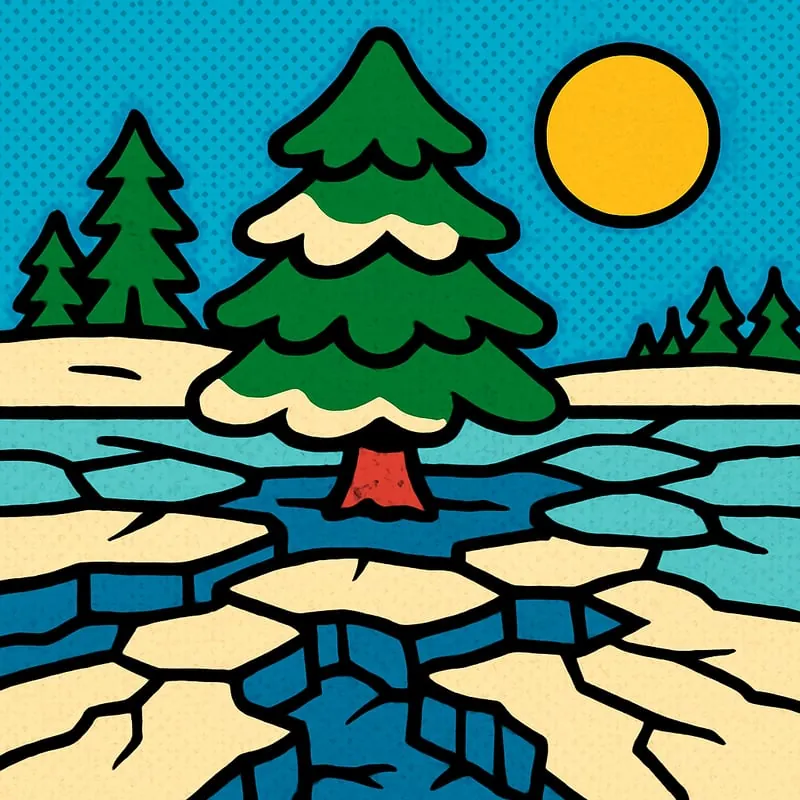
Permafrost covers about 24% of the land surface in the Northern Hemisphere - most of Siberia, much of Alaska and northern Canada, parts of Scandinavia. In some places it goes hundreds of meters deep. Above it sits a thin “active layer” of soil that thaws each summer and refreezes each winter, supporting plants and animals.
The frozen ground has preserved some extraordinary things. Siberian permafrost has yielded woolly mammoth carcasses with hair and stomach contents intact after 40,000 years. It’s preserved ancient viruses, prehistoric tools, and well-preserved insects. But permafrost is also a major environmental concern: as the climate warms, vast areas of it are starting to thaw, releasing huge amounts of stored methane and carbon dioxide and destabilizing the ground above. Roads, buildings, and entire towns in Russia and Canada have started sinking as the formerly solid ground turns to mush.