Before the 1850s, every single shirt, dress, sheet and curtain was stitched by hand, one needle pull at a time. A simple shirt could take 14 hours of careful work. Most families had only a few outfits, and they patched them over and over.
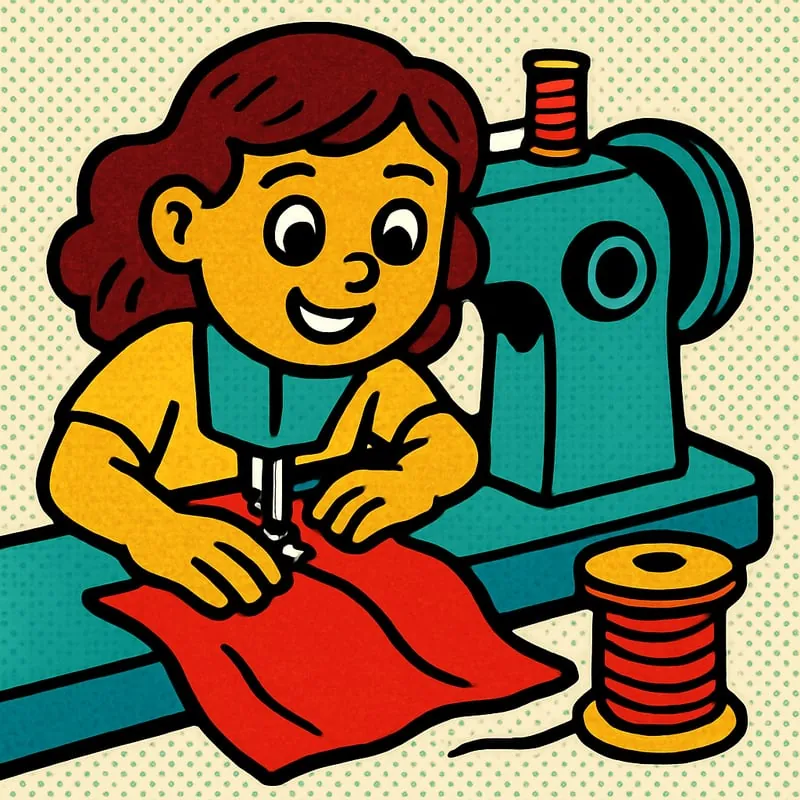
In 1846 an American inventor named Elias Howe patented a machine that used two threads at once - a needle thread on top and a bobbin thread underneath - to form a strong locking stitch. A few years later, Isaac Singer built a better version with a foot pedal so the operator could keep both hands free for steering the fabric.
A sewing machine could finish a shirt in about an hour. Clothes suddenly got cheaper, easier to replace and easier to design. Today’s industrial sewing machines can stitch over 5,000 times a minute, which is why a brand-new T-shirt can cost less than a sandwich.