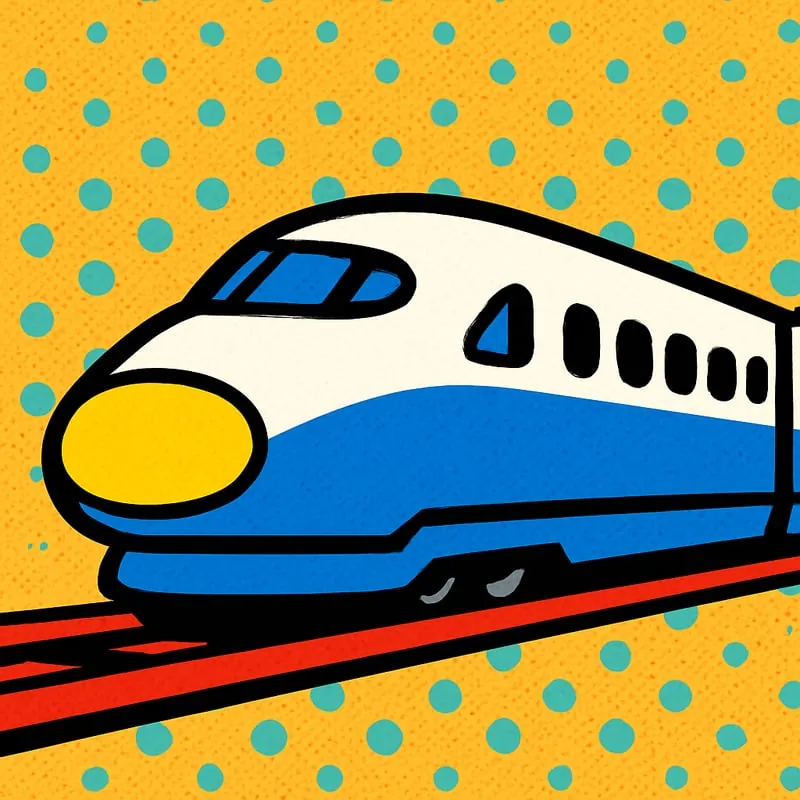
Japan’s Shinkansen, or bullet train, launched in 1964 just in time for the Tokyo Olympics. It zipped between cities at speeds nobody had seen before in regular passenger service. Today, fastest Shinkansen routes cruise at over 200 mph and connect most of Japan’s biggest cities. Trains arrive on average less than a minute late.
That long pointy nose isn’t just for show. When a bullet train hits a tunnel at high speed, it can shove a column of air forward that booms out the other end like a cannon. Engineers studied the beak of a kingfisher diving into water and used the same shape on the train, which made the noise problem go away.
The safety record is even more remarkable. In over 60 years and billions of passenger trips, no passenger has ever died from a Shinkansen crash or derailment in normal service. Cleaning crews known as the “7-Minute Miracle” turn each train around between runs in seven minutes flat - sweeping, wiping, and rotating seats before the next group boards.