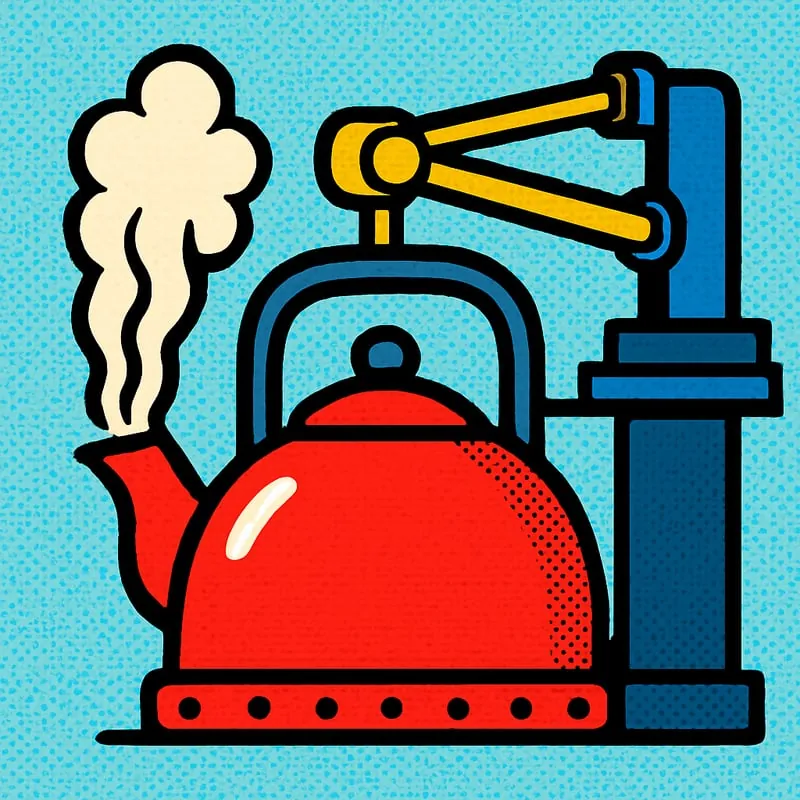
For thousands of years the strongest engines humans had were horses, oxen and the wind. Then, in 1712, an English ironmonger named Thomas Newcomen built a giant machine that burned coal, boiled water and used the pressure of the steam to push a piston up and down. Suddenly, machines could work without getting tired.
The Scottish engineer James Watt improved it in 1769 by adding a separate chamber where the steam could cool down. His version used much less coal and could turn a wheel smoothly. That meant steam could power spinning machines in factories, pumps in mines and eventually trains and ships.
Whole new cities grew up around the smoking factory chimneys. Travel that once took weeks by horse took days by steam train. Historians call this huge change the Industrial Revolution, and almost all of it was kicked off by figuring out how to harness a boiling kettle.