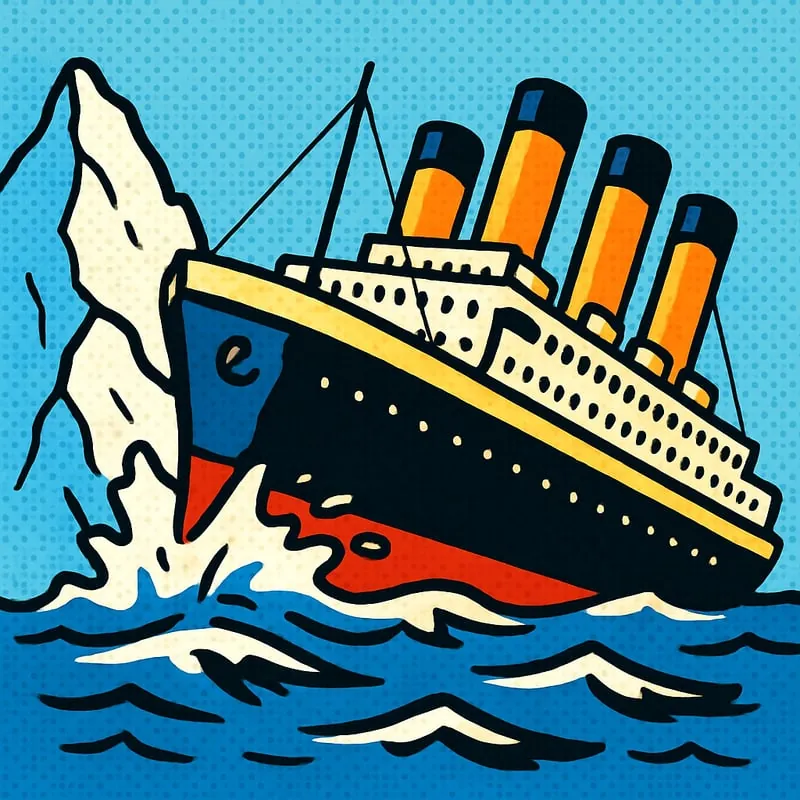
The Titanic was the largest passenger ship in the world when it set off on its first voyage in April 1912. Designers called it “unsinkable” because it had 16 watertight compartments. So when lookouts spotted an iceberg in the dark North Atlantic on April 14, no one expected the worst.
The ship scraped along the iceberg at 11:40 PM, opening narrow gashes along five compartments at once. The Titanic could survive with four flooded - but not five. Within an hour, ice-cold water was rushing in faster than pumps could push it out. By 2:20 AM, the ship had broken in two and sunk to the bottom of the ocean.
Of the 2,200 people on board, about 1,500 died. The ship carried lifeboats for only around half its passengers - and many of those lifeboats launched half-empty. The disaster led to new laws requiring enough lifeboats for everyone on board, plus 24-hour radio watches at sea.