The further you live from the equator, the more dramatic your seasons get. Areas near the poles have extreme summers and winters. The middle latitudes get four roughly equal seasons. But in the tropics - the band of Earth between 23.5° north and 23.5° south of the equator - seasons as most of the world experiences them don’t really exist.
The tropics stay warm year-round, and daylight stays close to 12 hours all year. There’s no real “winter” with cold weather or short days. There’s a small wobble in temperature, but not enough to count as a true season change in the usual sense.
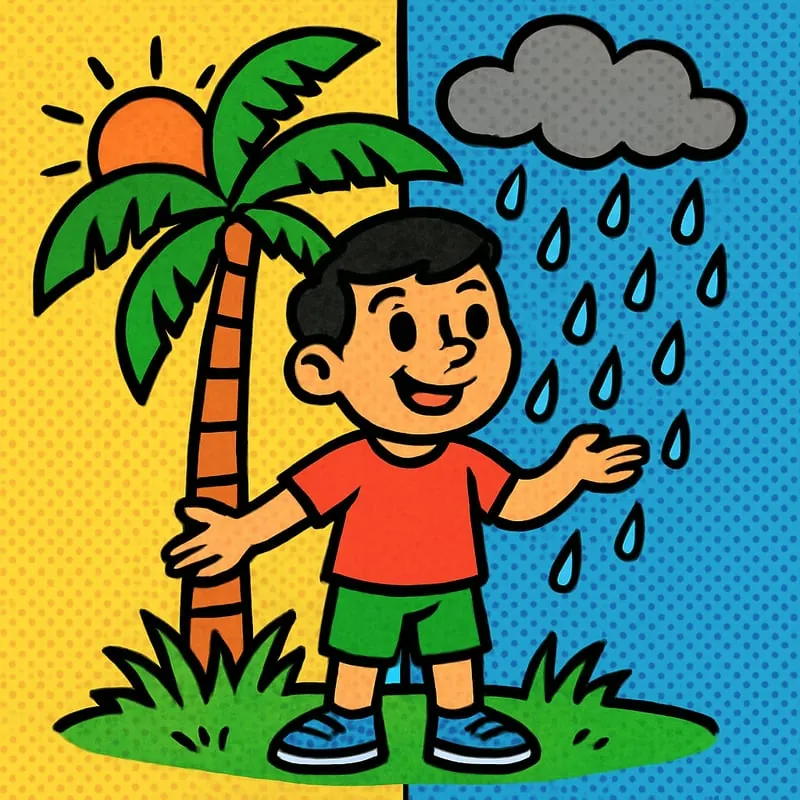
Instead, the tropics have wet and dry seasons. In monsoonal regions like India and Southeast Asia, the year is divided into a rainy season (when heavy monsoon rains fall) and a dry season. In equatorial rainforests like the Amazon and Congo, there’s a wetter half and a drier half. People living in the tropics often find the standard “spring/summer/autumn/winter” labels confusing - those don’t really match what they experience. They organize their year around rainfall and crop cycles instead.