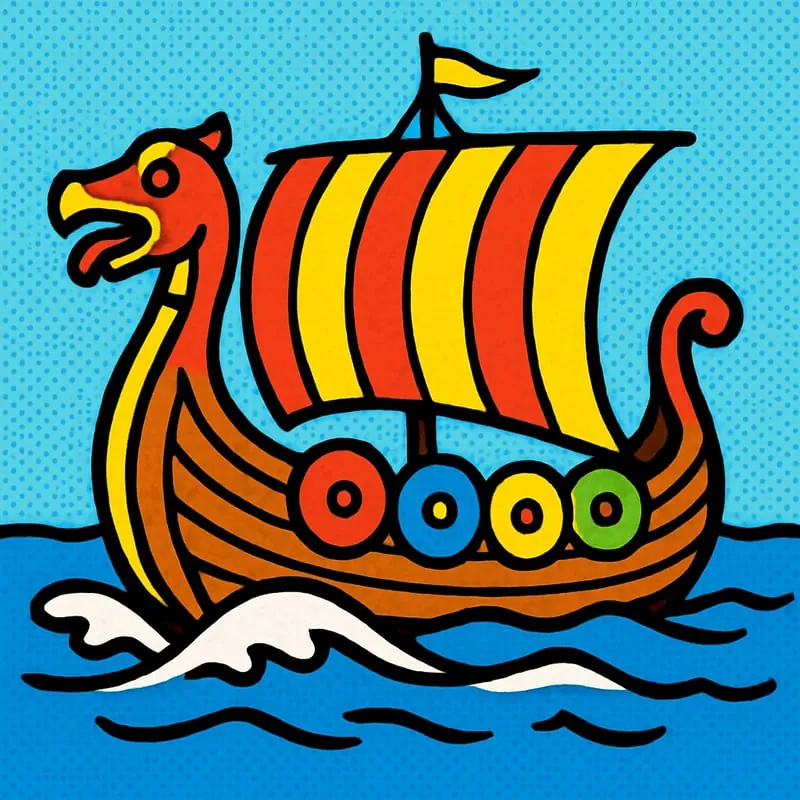
A Viking longship was a marvel of medieval shipbuilding. Long, narrow, and built from overlapping oak planks, it had a single square sail and benches for 30 or more rowers. The largest ones stretched up to 100 feet, but the design was light enough that a crew could drag the ship up onto a beach or even across short stretches of land.
The most clever trick was the ship’s shallow draft. A loaded longship only sank about three feet into the water, so it could sail in rivers and inlets where bigger ships would run aground. Viking raiders used this advantage to strike towns hundreds of miles inland in England, France, and Russia before locals could organize a defense.
The hull was also flexible. The overlapping planks could twist and bend with rough waves instead of cracking like a stiff hull would. This let Viking crews sail across the open North Atlantic, reaching Iceland, Greenland, and even Newfoundland in Canada around the year 1000 - about 500 years before Columbus.