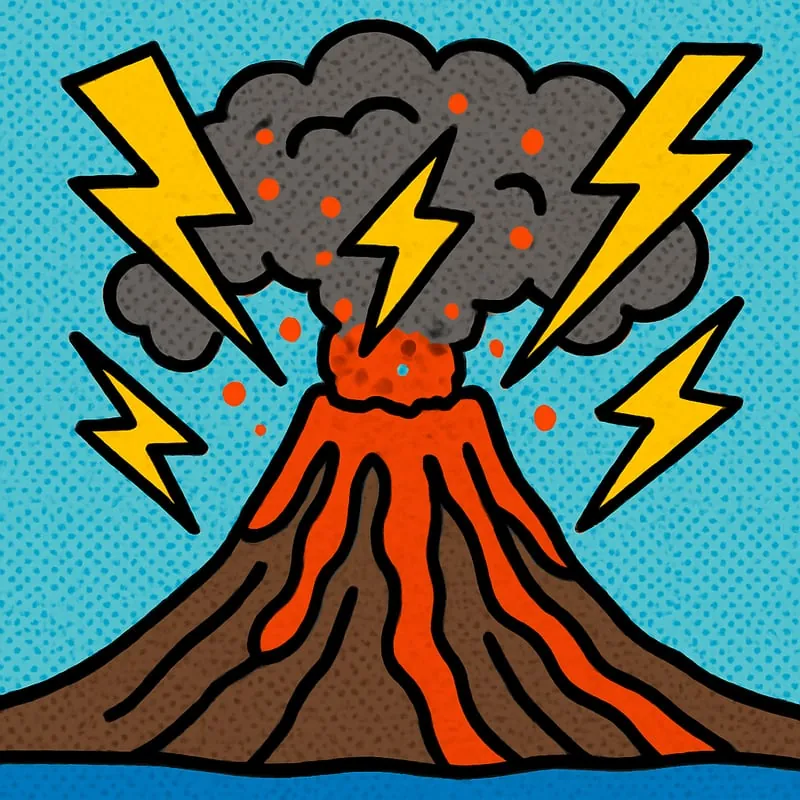
Lightning isn’t just a feature of thunderstorms. Volcanoes produce their own version, and the resulting displays are some of the most spectacular electrical events on the planet. When a volcano erupts violently, it sends massive plumes of ash, rock fragments, and gas high into the atmosphere. As those particles rub against each other inside the plume, they build up enormous static electric charges - much like rubbing a balloon on your hair, but on a planetary scale.
When the charge differences inside the plume get large enough, the result is lightning. Massive bolts crackle through the ash cloud, often appearing eerie purple or red against the dark ash. The phenomenon is called volcanic lightning, and it can produce some of the largest, most powerful lightning bolts on Earth.
Famous examples include the 2010 eruption of Eyjafjallajökull in Iceland (which produced spectacular nighttime lightning), the 2015 Calbuco eruption in Chile, and the 2022 Hunga Tonga–Hunga Haʻapai eruption, which generated nearly 400,000 lightning strikes in a few hours - possibly the most intense lightning storm ever recorded. Volcanic lightning doesn’t just look amazing; scientists also use it to monitor eruptions remotely and assess their intensity.