In November 1895 the German physicist Wilhelm Röntgen was experimenting with electricity inside glass tubes. He noticed that a chemical-coated screen across the room kept glowing even when he covered the tube with thick cardboard. Something invisible was passing right through the cardboard. He didn’t know what it was, so he called it an “X” ray - the letter scientists use for unknowns.
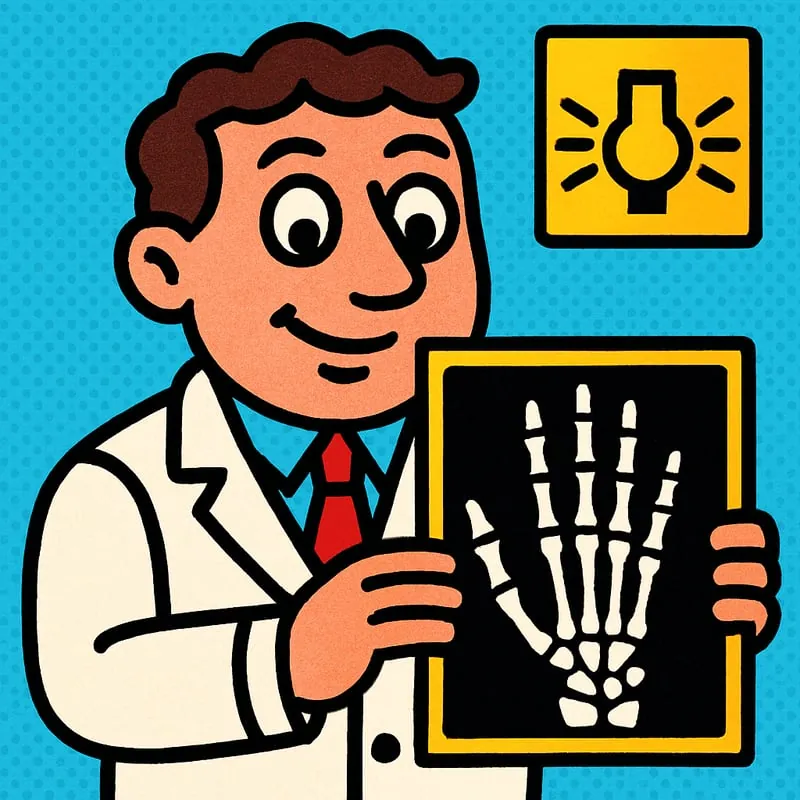
A few weeks later he asked his wife Bertha to put her hand on a photographic plate and aimed the rays at it. The picture that developed showed her finger bones and the dark shadow of her wedding ring. It was the first X-ray photo of a person, and it stunned the world. Within months, doctors everywhere were ordering machines.
Today X-rays let doctors check broken bones, dentists find cavities and airports peek inside luggage - all without making a single cut. Röntgen won the first Nobel Prize in Physics in 1901 and refused to patent his discovery so everyone could use it freely.