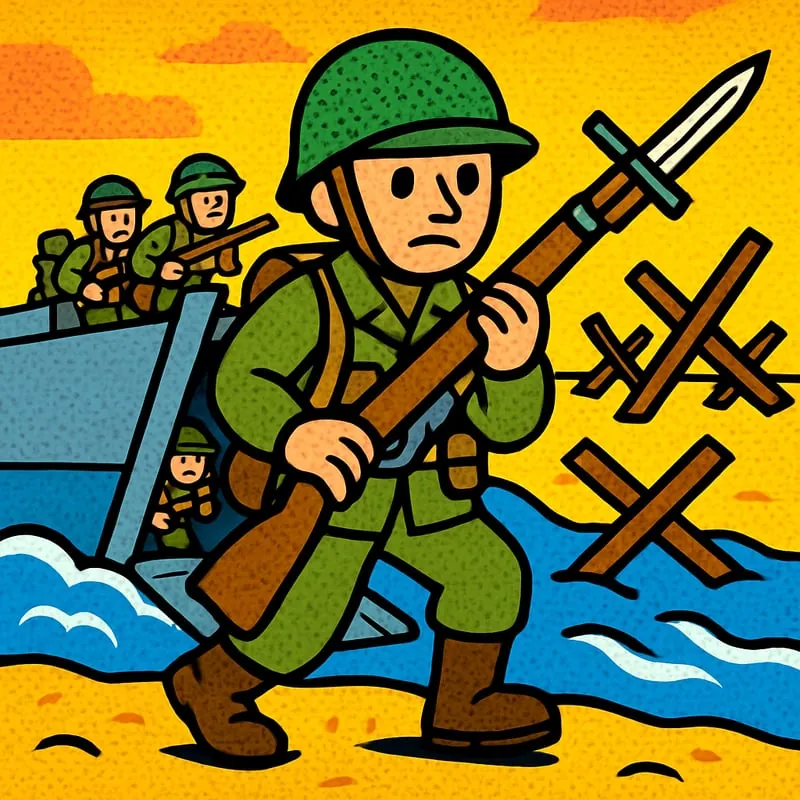
Just after midnight on June 6, 1944, the largest invasion in history began with whispers in the dark. Paratroopers from the United States, Britain, and Canada dropped behind enemy lines in occupied France, while thousands of ships slipped across the English Channel through stormy waves. By dawn, 156,000 Allied soldiers were charging onto five long strips of French sand with the code names Utah, Omaha, Gold, Juno, and Sword.
German bunkers on the cliffs fired down at the boats as the ramps dropped. Omaha Beach was the worst - soldiers waded through cold water and across open sand under heavy fire. Engineers cleared mines and barbed wire while medics dragged the wounded into shelter. By the end of that very long day, the Allies had a foothold on the beaches of Normandy, and a steady river of jeeps, tanks, and trucks began rolling ashore. General Dwight D. Eisenhower, who had planned the whole thing, had quietly written a letter the night before saying he would take full blame if it failed. He never had to send it.
The invasion was called Operation Overlord, but the world remembers it by its code name, D-Day. Within a year, Paris was free, and Germany surrendered in May 1945. Today the beaches are quiet again. Long rows of white crosses stand above Omaha, and visitors leave flowers each June. Old veterans, now in their hundreds, still walk the sand they once stormed - and tell schoolkids what it felt like to step off a boat into history.