In the market square of Annonay, France, on June 5, 1783, a huge cloth-and-paper bag the size of a small house sat over a smoky fire. Two brothers, Joseph and Étienne Montgolfier, were paper-makers who had been experimenting in secret. They believed they could make a sack rise into the sky if they filled it with the right kind of "smoke." A curious crowd of farmers and town officials gathered to see if the rumor was true.
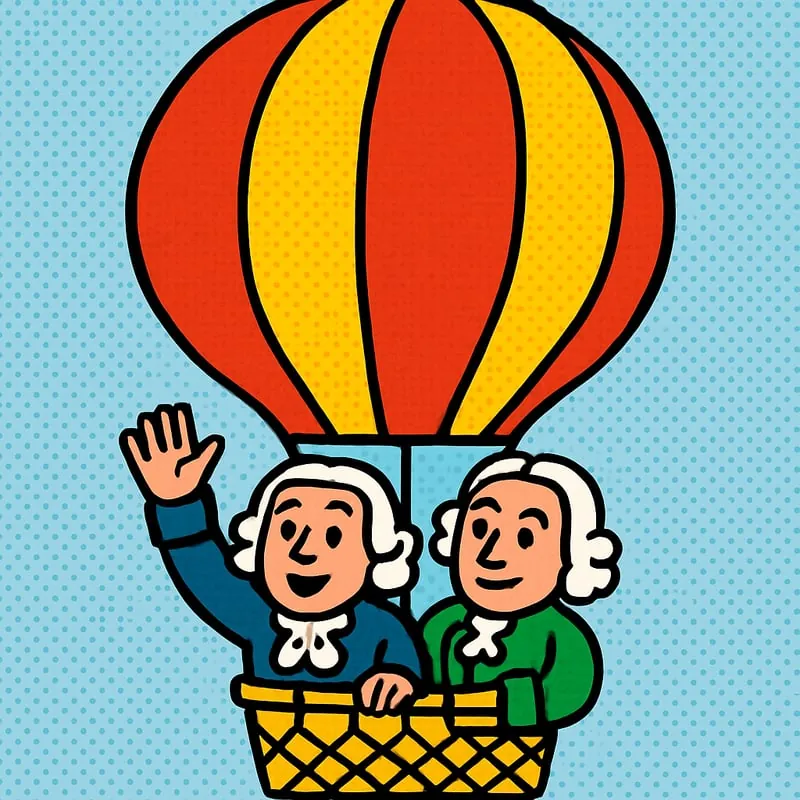
The brothers tossed handfuls of damp straw and wool onto the flames. The bag bulged. Then it puffed up. Then - slowly at first, then quickly - it lifted off the ground and climbed almost a mile into the warm spring air, traveling more than a kilometer before drifting down into a vineyard. It was the very first public hot air balloon flight in history. Nobody had ever flown like that before. Within months, the Montgolfiers were invited to perform for King Louis XVI at Versailles. That September, they sent up a sheep, a duck, and a rooster as the world's first balloon passengers - all three landed safely. By November, two brave men climbed into a basket and floated over Paris for 25 minutes.
The brothers had it slightly wrong - they thought a special smoke was lifting the balloon, when really it was just hot air being lighter than cool air. But their cloth bag opened the sky. Today every hot air balloon festival, every weather balloon, and every airship is a great-great-grandchild of that smoky afternoon in Annonay.