← All topics

PLANTS & NATURE

Giant sequoias, carnivorous plants, talking trees and the green half of life on Earth.

50 facts

MORE PLANTS & NATURE FACTS

49 facts
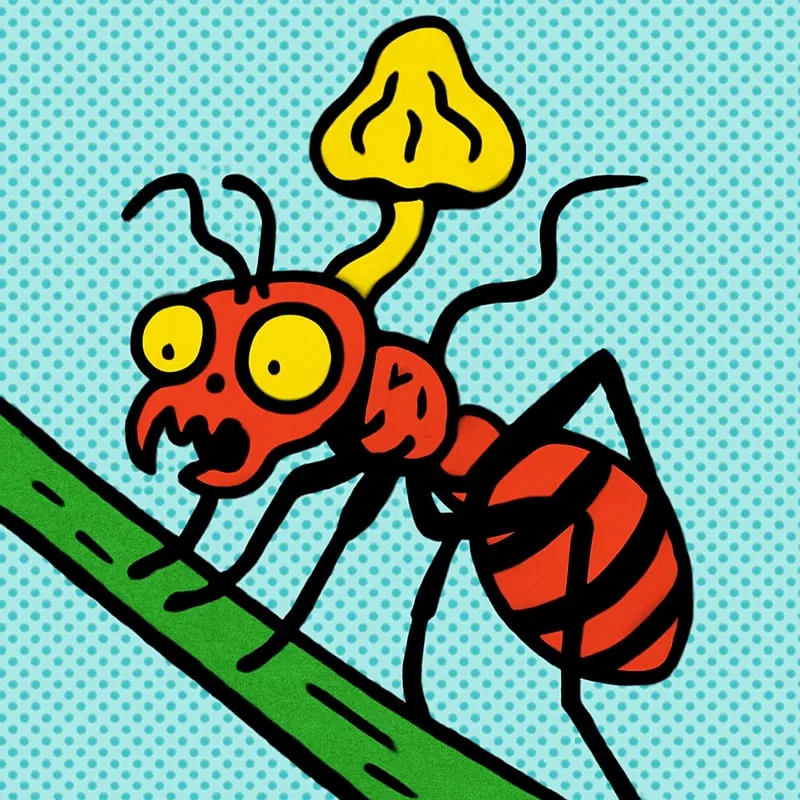
A bright red ant with bulging eyes climbs a green stem, topped with a yellow fungus sprouting from its head.
DID YOU KNOW? A fungus called Cordyceps turns ants into zombies before killing them. Spores infect an ant, take over its brain, and force it to climb up high so the fungus can spread. 2 min read
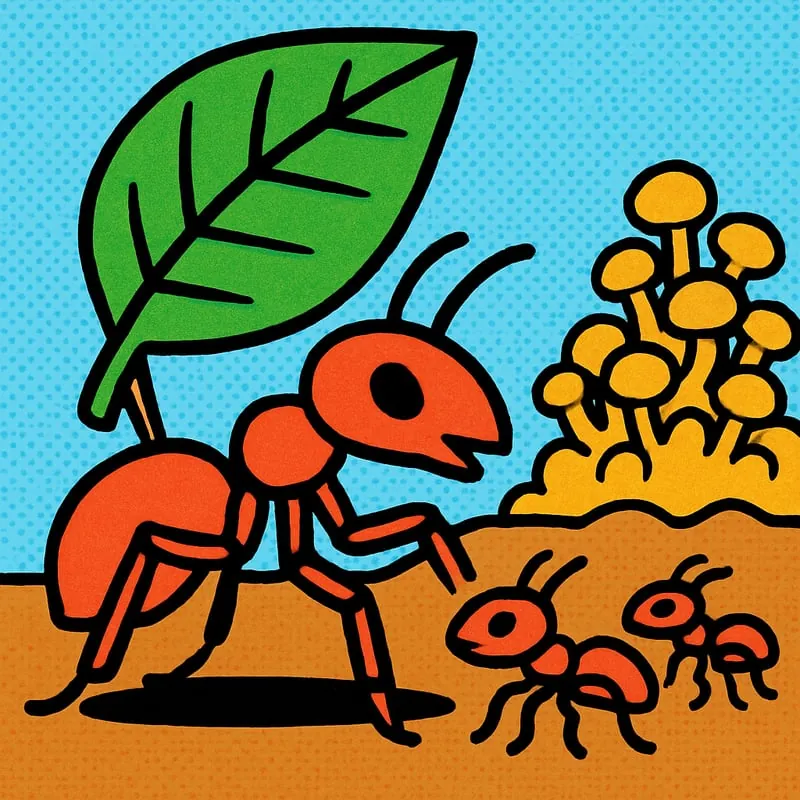
A bright red leafcutter ant carries a large green leaf, surrounded by smaller ants and a vibrant yellow fungus garden in the…
DID YOU KNOW? Leafcutter ants have been farming fungus for over 50 million years. They don't eat the leaves they carry - they feed them to a fungus garden that feeds them. 2 min read
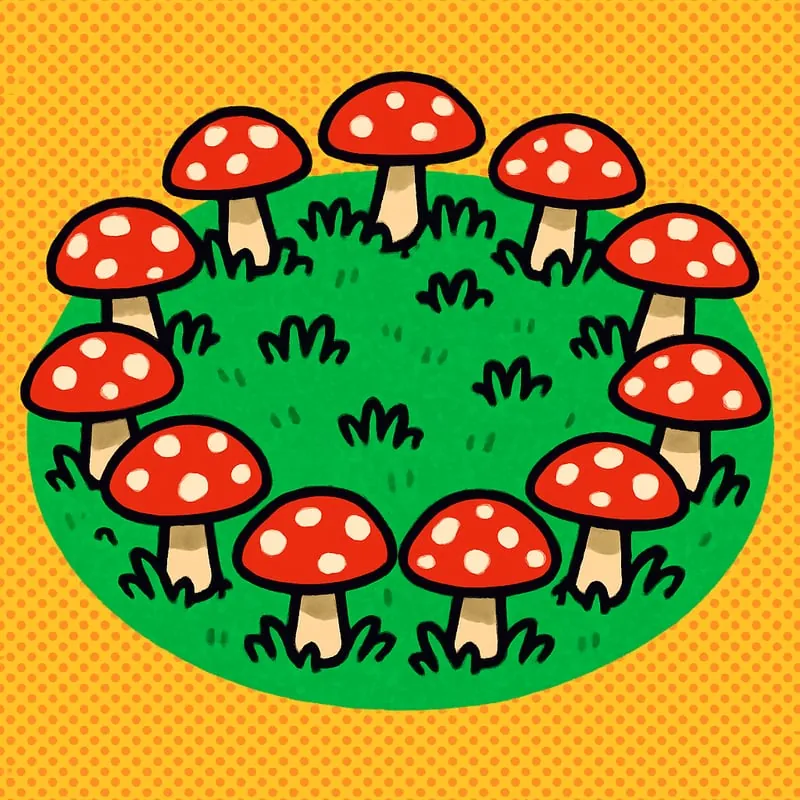
Bright red mushrooms with white spots form a perfect circle on a vibrant green grassy patch, surrounded by a sunny yellow…
DID YOU KNOW? Mushrooms appearing in a perfect circle aren't magic - they're a "fairy ring." A single underground fungus grows outward in all directions, fruiting in a circle at its edge. 2 min read
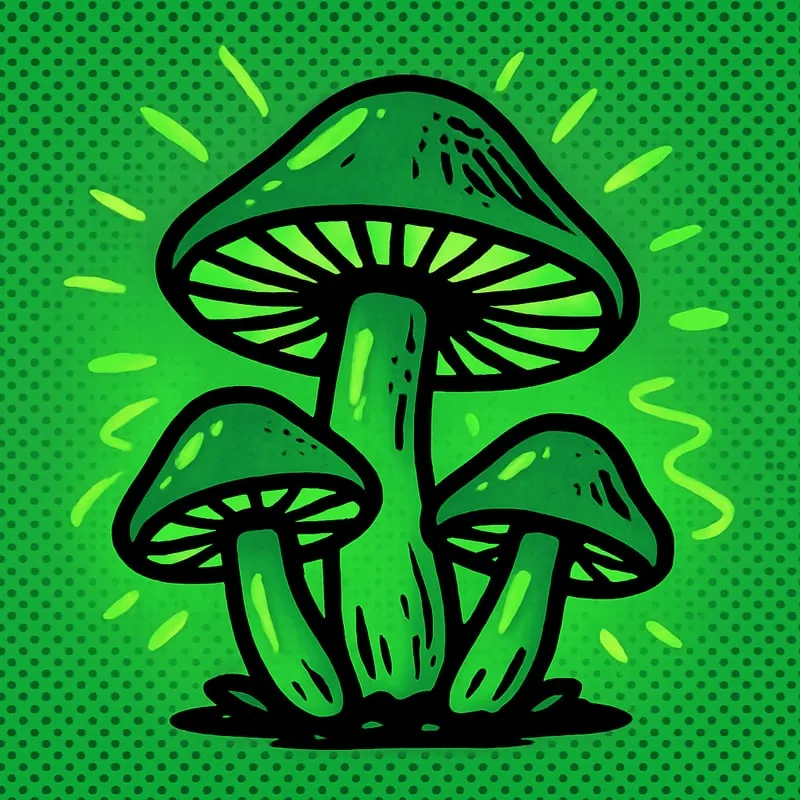
Three cartoon mushrooms glow bright green against a vibrant green background, radiating light like tiny fungal fireflies.
DID YOU KNOW? Some mushrooms glow in the dark with their own green light. It's not a trick of reflected light - they actually make their own gentle glow, like fungal fireflies. 2 min read
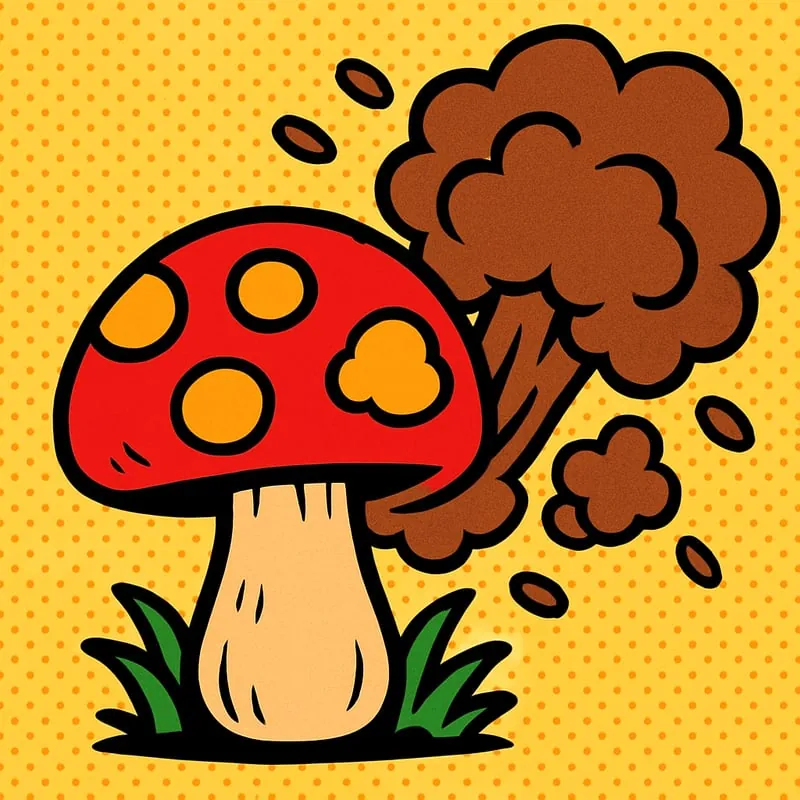
A bright red mushroom with yellow spots releases a cloud of brown spores, bursting out like a playful puff of smoke.
DID YOU KNOW? A single mushroom can fire off a trillion microscopic spores. Spores are how fungi spread. A puffball can spit out billions in one shot of brown smoke. 2 min read
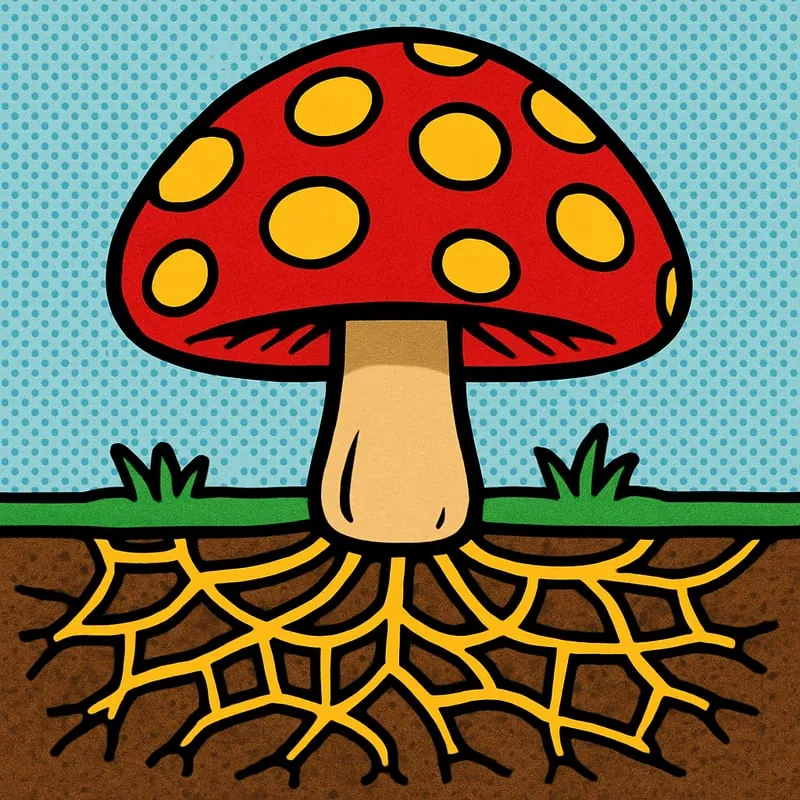
A vibrant red mushroom with yellow spots stands tall above the ground, while a network of golden mycelium threads spreads…
DID YOU KNOW? Most of a mushroom lives underground as a giant web of threads. The mushroom you see is just the fruit. The real organism is a hidden net called mycelium spreading for metres. 2 min read
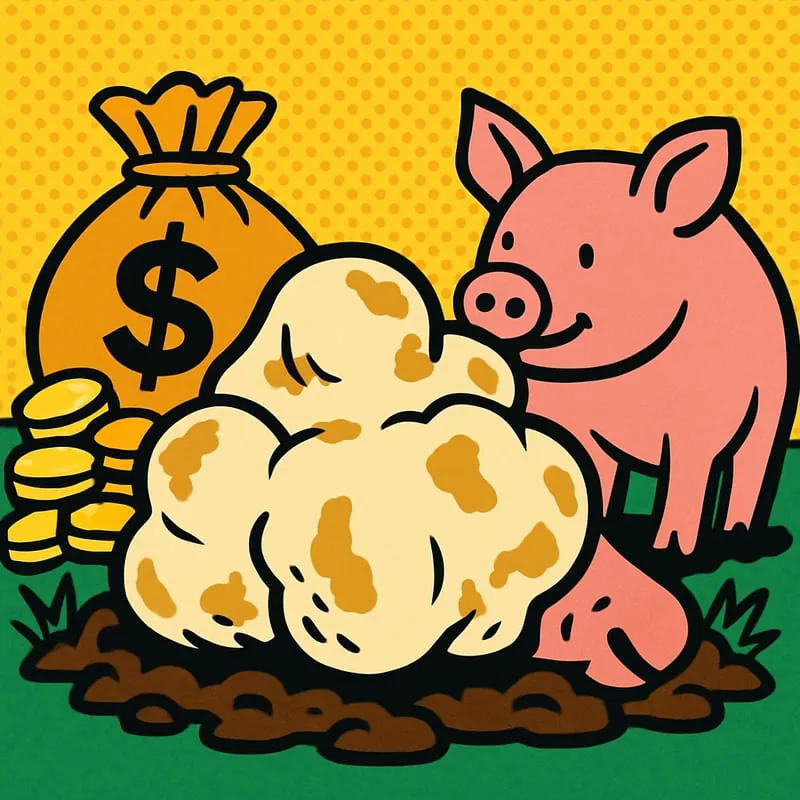
A cheerful pink pig digs in the ground next to a large white truffle, with a money bag and gold coins gleaming nearby.
DID YOU KNOW? White truffles can cost more than gold by weight. These knobby underground mushrooms sell for thousands of dollars a kilo - and pigs help find them. 2 min read
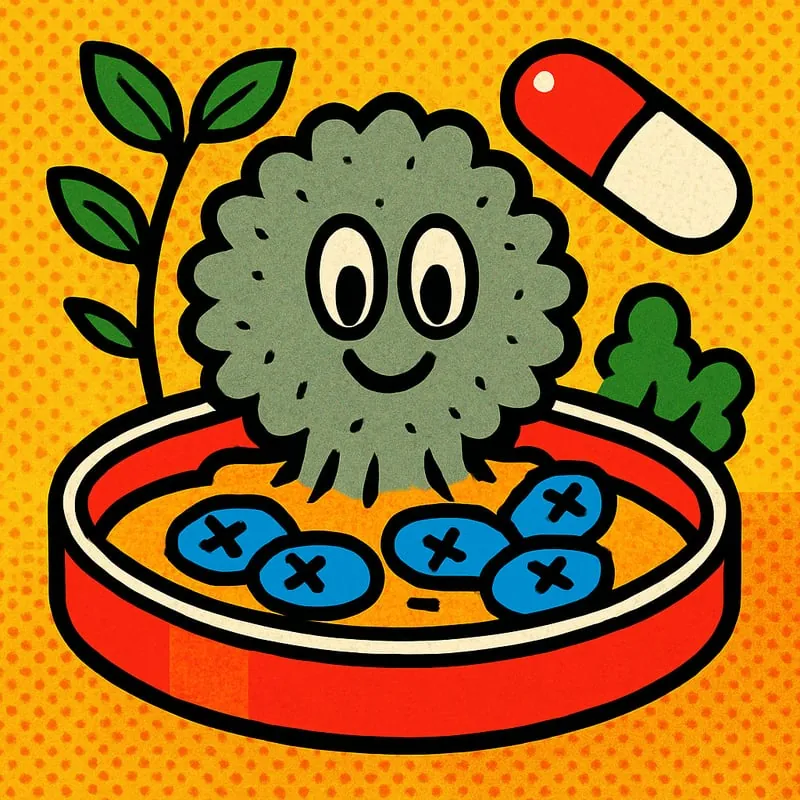
A cheerful green mould with eyes sits in a petri dish, surrounded by blue bacteria and a red capsule floating above.
DID YOU KNOW? The world's first antibiotic came from a fuzzy mould growing on a forgotten dish. Alexander Fleming returned from holiday in 1928 to find a mould had killed all the bacteria around it. 2 min read
A cheerful round character with a chef's hat waves next to a loaf of bread, surrounded by sparkling yeast bubbles.
DID YOU KNOW? Yeast is a tiny single-celled fungus that bakes your bread. Each grain of dried yeast holds billions of microscopic fungus cells just waiting to wake up. 2 min read
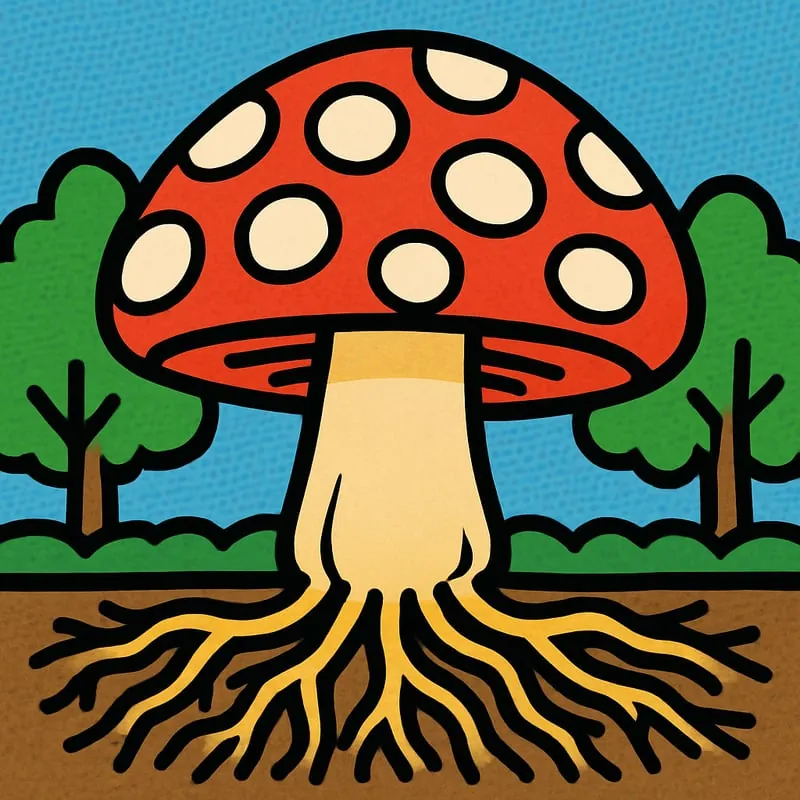
A giant red mushroom with white spots towers above the ground, its thick roots stretching deep into the soil beneath green…
DID YOU KNOW? A single fungus in Oregon covers an area bigger than 1,600 football fields. Most of it is underground, threading through tree roots - and it might be 8,000 years old. 2 min read
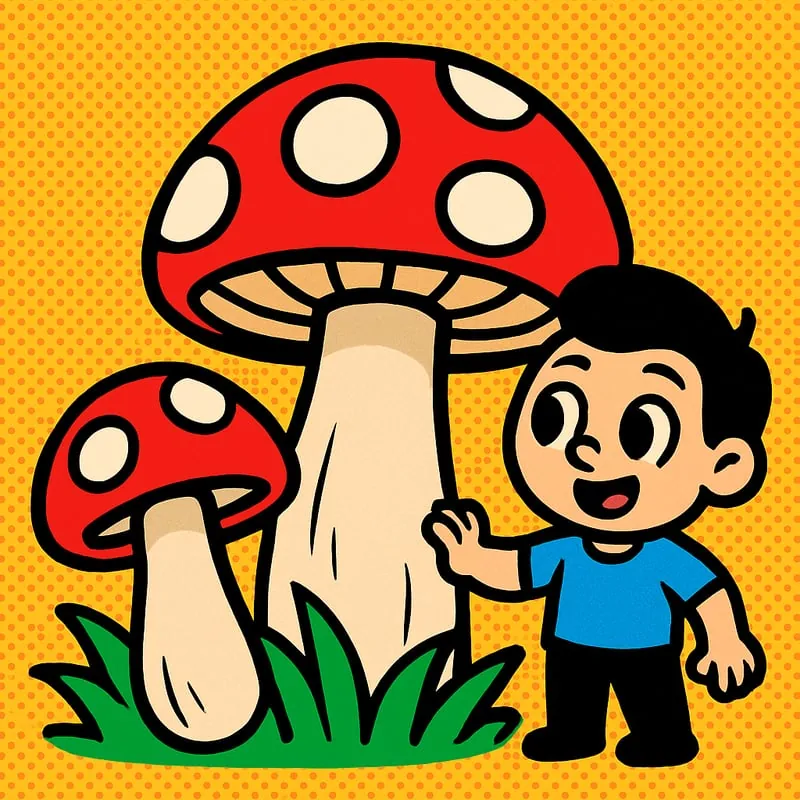
A cheerful boy in a blue shirt stands next to two large, red-and-white spotted mushrooms, surrounded by green grass on a…
DID YOU KNOW? Mushrooms aren't plants - they belong to their own kingdom. Fungi are more closely related to you than they are to trees, ferns or flowers. 2 min read
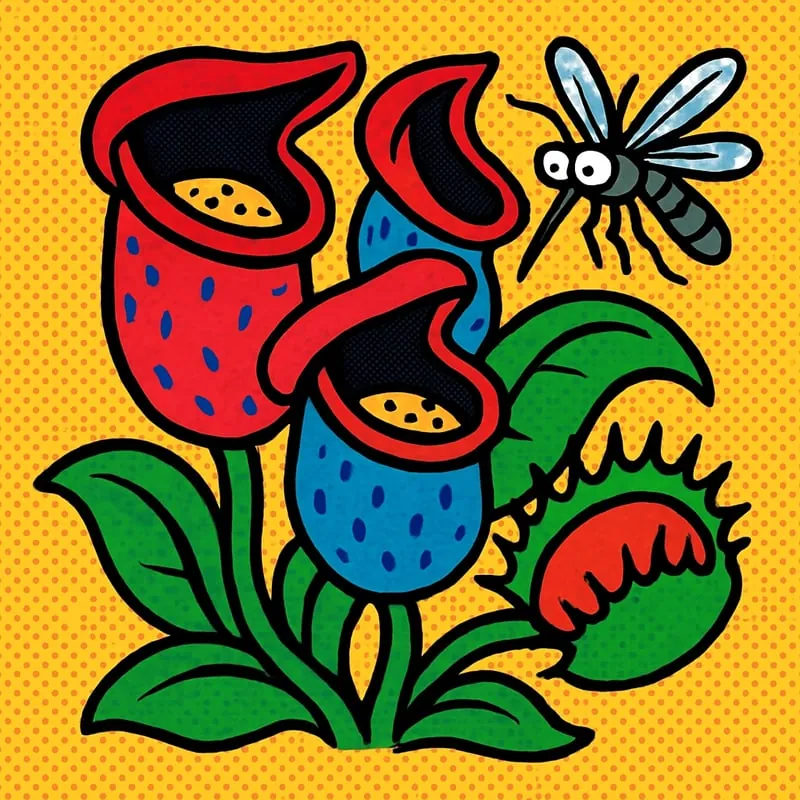
Three vibrant carnivorous plants with red and blue tubular shapes eagerly await a buzzing fly hovering nearby.
DID YOU KNOW? Carnivorous plants eat insects to steal their nitrogen. They get their energy from the sun like other plants - but they crave bug juice for the building blocks of life. 2 min read
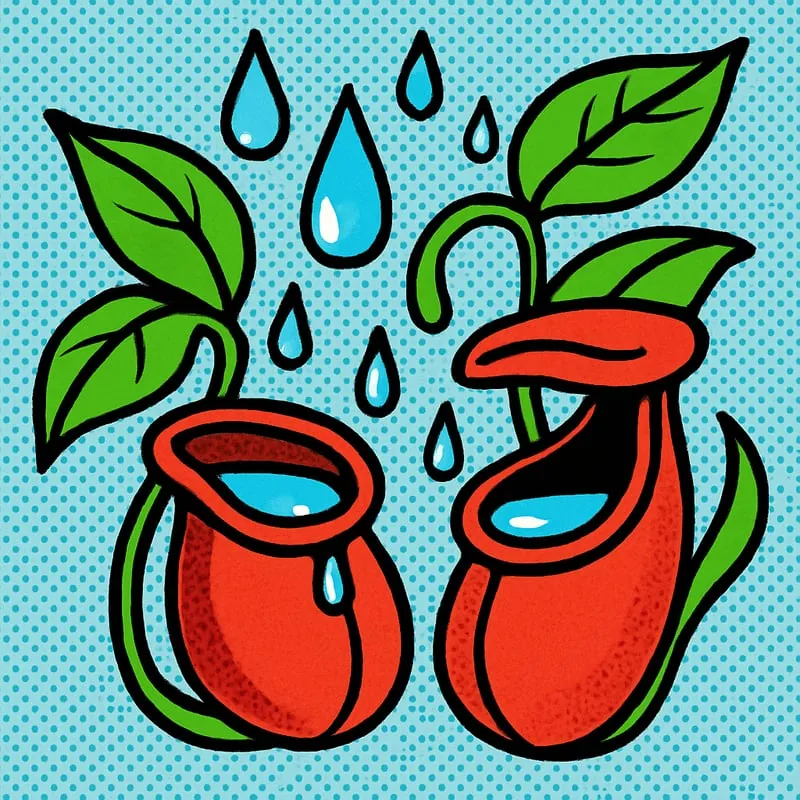
Two vibrant red pitcher plants with open tops hold rainwater, surrounded by playful blue raindrops and green leaves.
DID YOU KNOW? Tropical pitcher plants collect their own drinking water from rainfall. Each pitcher is a custom-built cup of rainwater laced with digestive juice - and animals drink from it. 2 min read
A cheerful purple flower with smiling faces stands above a spiraling, corkscrew root trapping tiny microbes in the soil.
DID YOU KNOW? A plant called Genlisea hunts microbes with underground corkscrew traps. Tiny soil creatures swim into a spiral root, get funnelled deeper, and have no way back. 2 min read
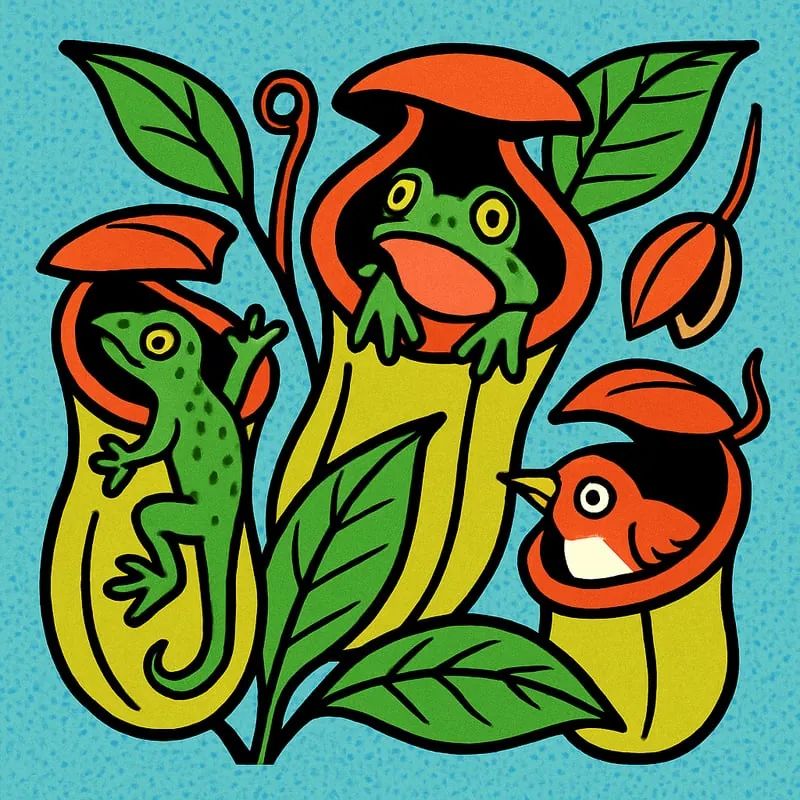
Colorful pitcher plants with bright red tops trap a green frog, a spotted lizard, and a small bird among lush green leaves.
DID YOU KNOW? Some carnivorous plants have been caught eating frogs, lizards and small birds. They usually stick to insects. But the biggest pitcher plants will absolutely take a vertebrate if one slips in. 2 min read
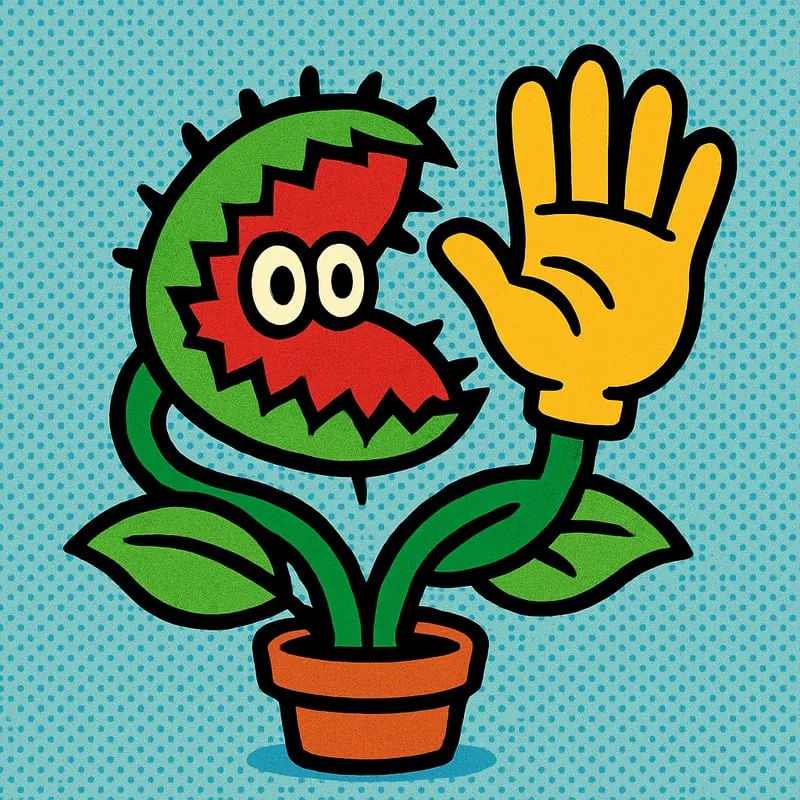
A vibrant Venus flytrap with a cartoonish face eagerly watches a bright yellow hand raised in a counting gesture.
DID YOU KNOW? A Venus flytrap can actually count to five. One trigger touch keeps it watching. Two close it. Five make it start digesting its lunch. 2 min read
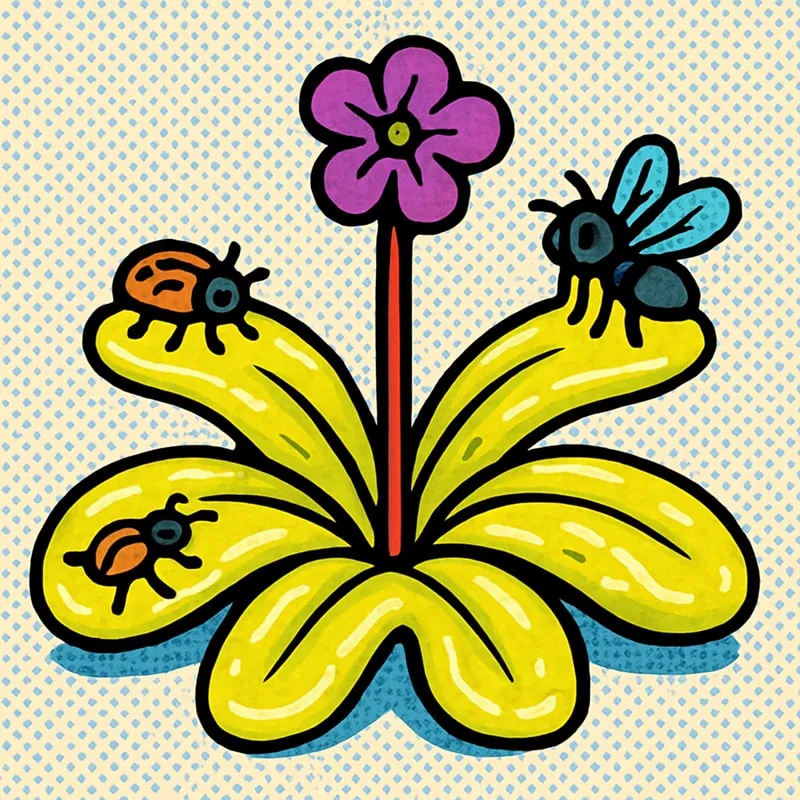
Bright yellow butterwort leaves glisten with a slimy texture, while tiny bugs get stuck, and a purple flower blooms above.
DID YOU KNOW? Butterworts catch bugs with leaves that feel like greasy butter. Tiny insects land on the slimy surface and stick fast - like flies on a buttered piece of bread. 2 min read
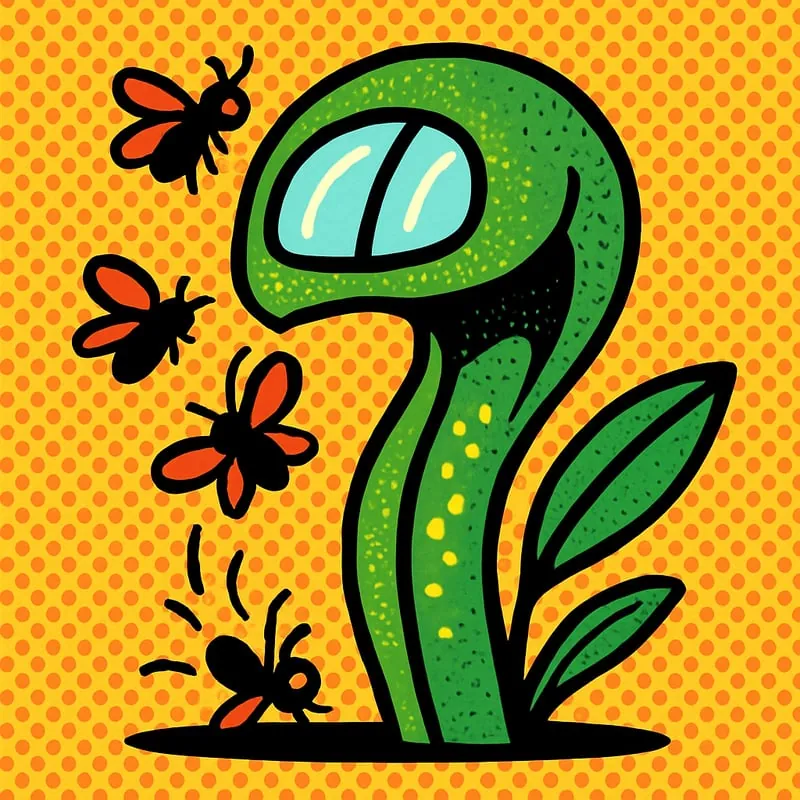
A vibrant green cobra lily with see-through "windows" in its hood lures buzzing insects against a bright orange backdrop.
DID YOU KNOW? The cobra lily confuses prey with see-through "windows" in its hood. Insects fly toward the light, smack into a fake exit, and tumble down into the trap. 2 min read
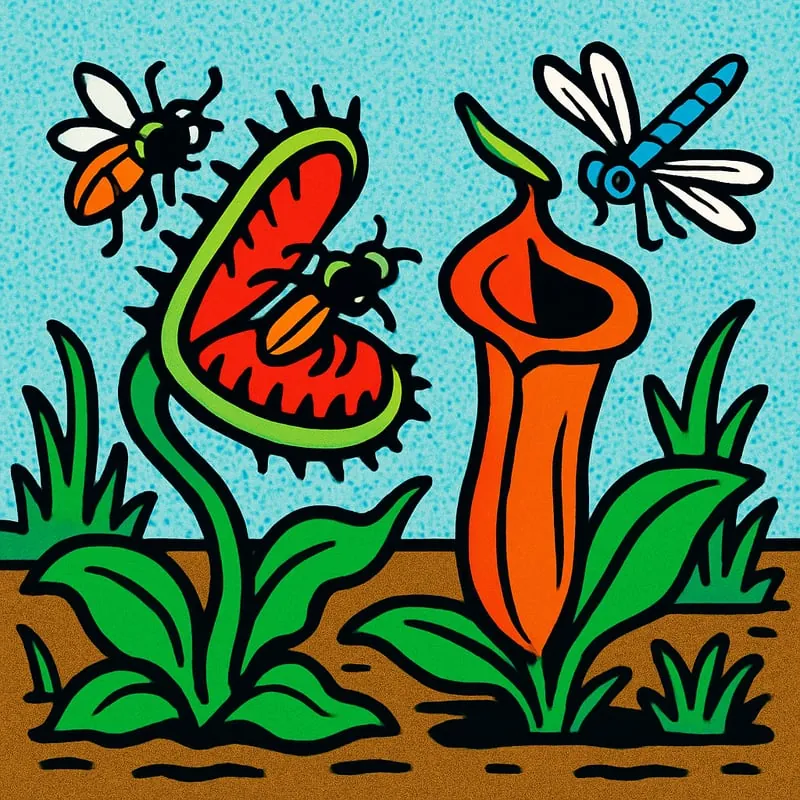
A vibrant Venus flytrap snaps shut on a buzzing bee while a tall orange pitcher plant waits for a dragonfly above a colorful…
DID YOU KNOW? Carnivorous plants evolved to eat bugs because their soil is rubbish. They live in swamps and bogs where the dirt has almost no nitrogen - so they get it from animals instead. 2 min read
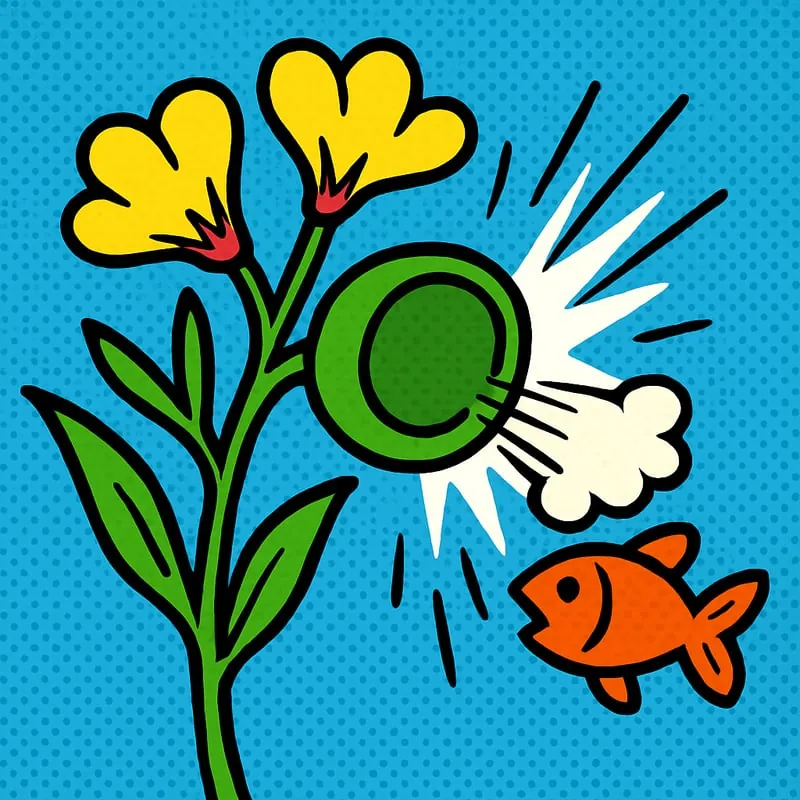
A vibrant bladderwort plant with yellow flowers and a green trap launches a tiny orange fish into the air with a burst of…
DID YOU KNOW? The bladderwort has the fastest trap of any plant - under a millisecond. It sucks tiny prey into a vacuum bladder so fast that scientists need slow-motion cameras to see it happen. 2 min read
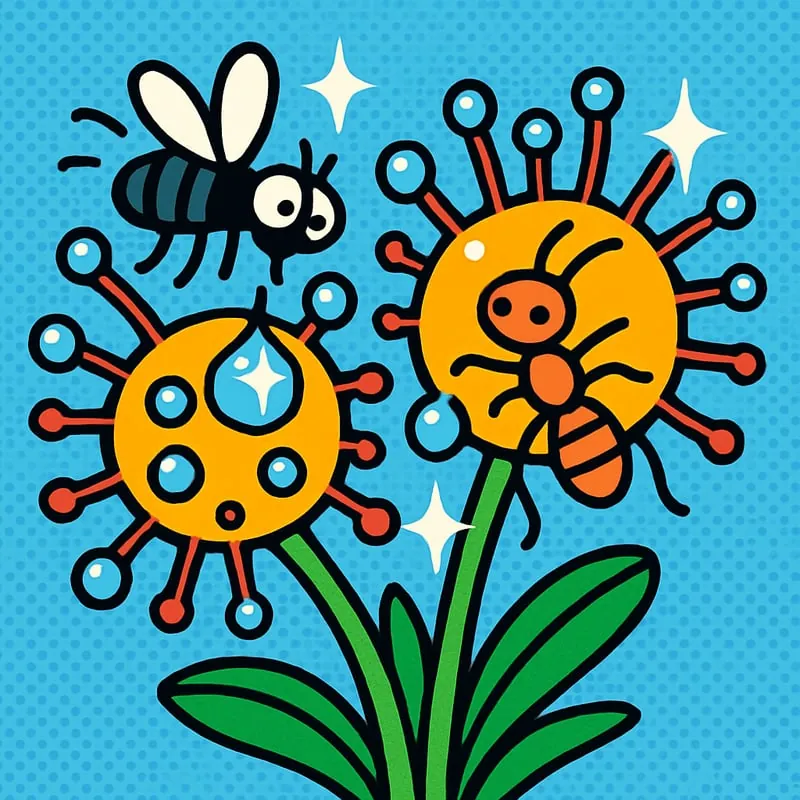
A bright yellow sundew plant glistens with sticky droplets, while a curious fly and an ant get trapped in the magical glue.
DID YOU KNOW? Sundews catch insects with glittering drops of glue. Their dewy "raindrops" look magical - until you realise they're a sticky, slow-acting death trap. 2 min read
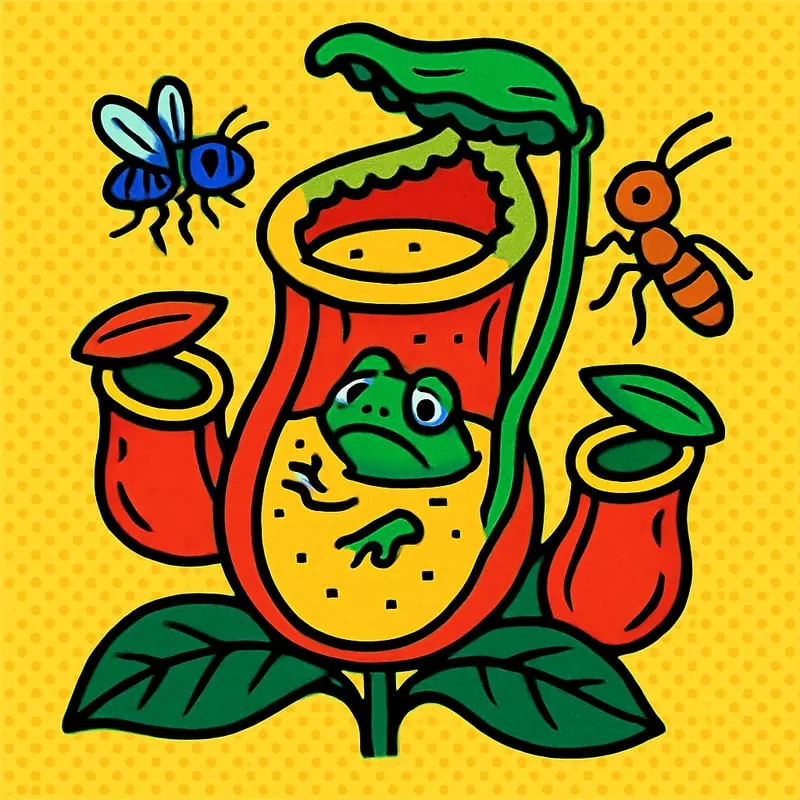
A bright red pitcher plant with a curious frog peeking out, surrounded by buzzing bees and an ant, all on a sunny yellow…
DID YOU KNOW? Pitcher plants are slippery cups full of digestive soup. Insects (and sometimes even small mammals) slip inside, can't climb out, and get slowly dissolved. 2 min read
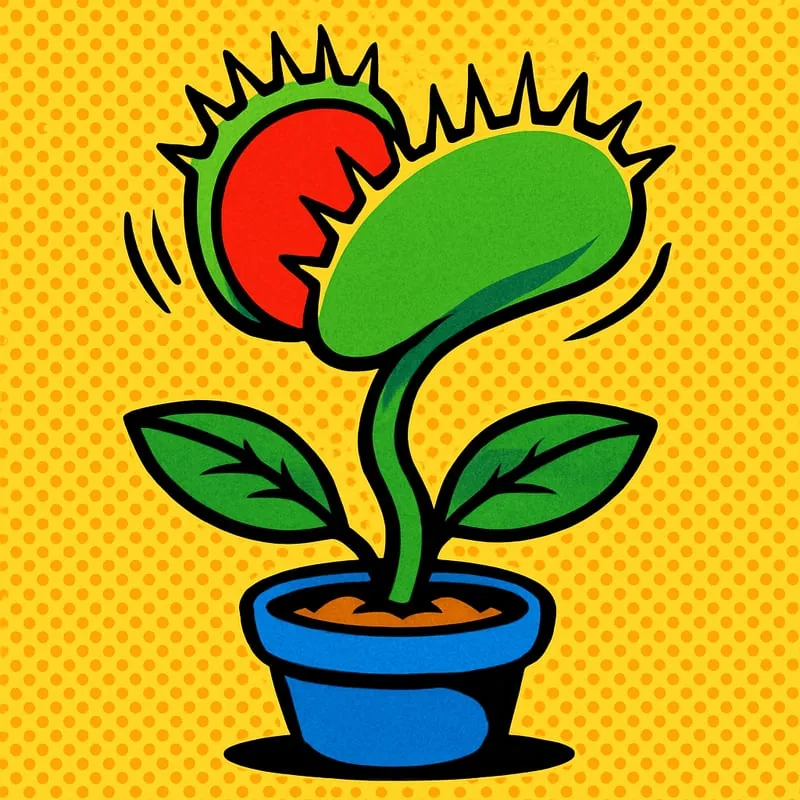
A vibrant Venus flytrap with a bright red mouth snaps shut, surrounded by playful green leaves in a blue pot.
DID YOU KNOW? A Venus flytrap snaps shut in less than a tenth of a second. That's faster than you can blink - and one of the quickest movements in the entire plant kingdom. 2 min read
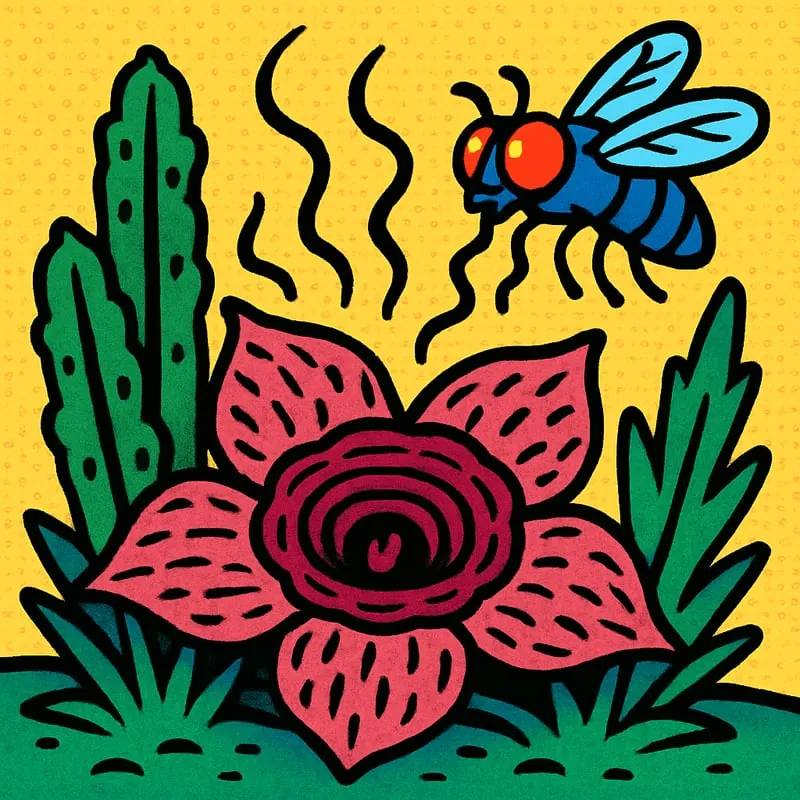
A large, dark pink flower with a wavy texture emits squiggly stink lines as a bright blue fly buzzes nearby.
DID YOU KNOW? Some flowers smell like rotting meat on purpose - to trick flies into pollinating them. Carrion flowers ditch the sweet perfume and go for the full dead-animal stench instead. 2 min read
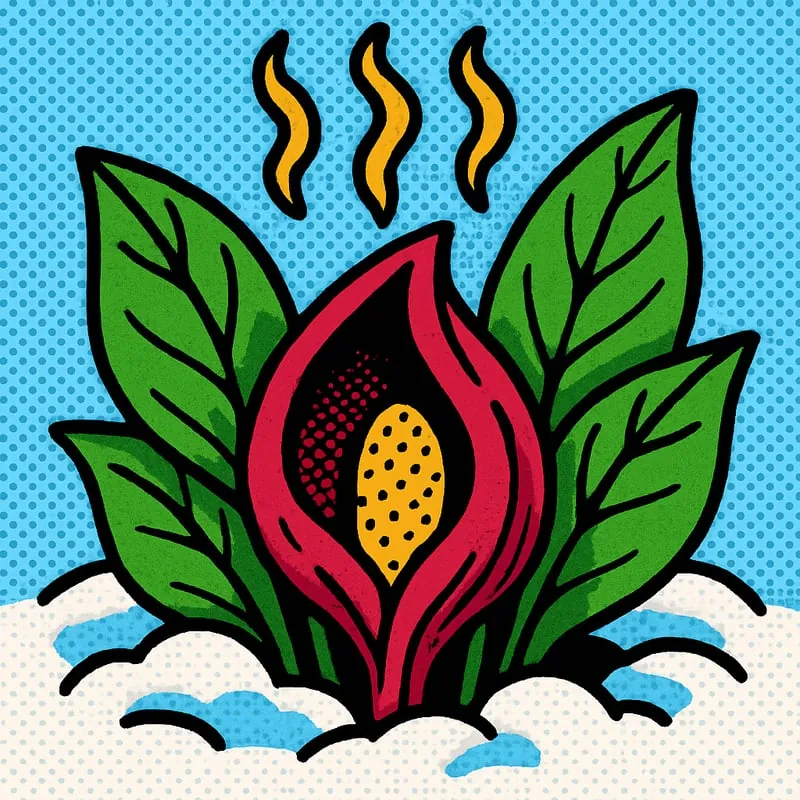
A vibrant skunk cabbage bursts through the snow, radiating heat with wavy lines above its striking red flower and green…
DID YOU KNOW? Some flowers actually heat themselves up like tiny biological radiators. Skunk cabbage can melt the snow around it by generating its own body heat. 2 min read
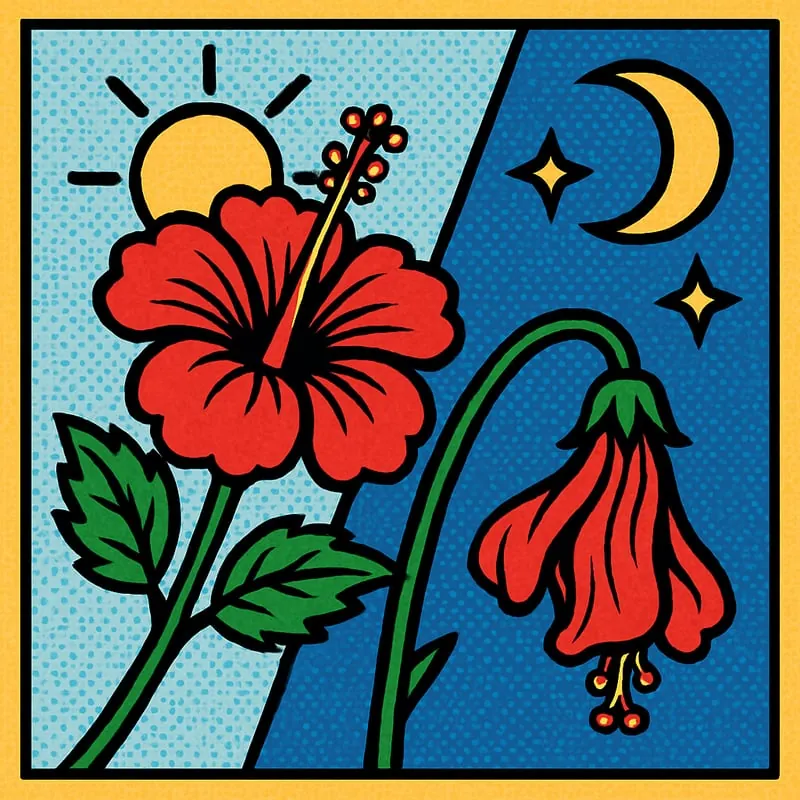
A vibrant red hibiscus flower blooms in the sunlight, while a wilted version droops under a crescent moon.
DID YOU KNOW? A hibiscus flower opens at dawn - and is dead by sunset. One single day. That's all a hibiscus bloom gets to live, no matter how perfect the weather. 2 min read
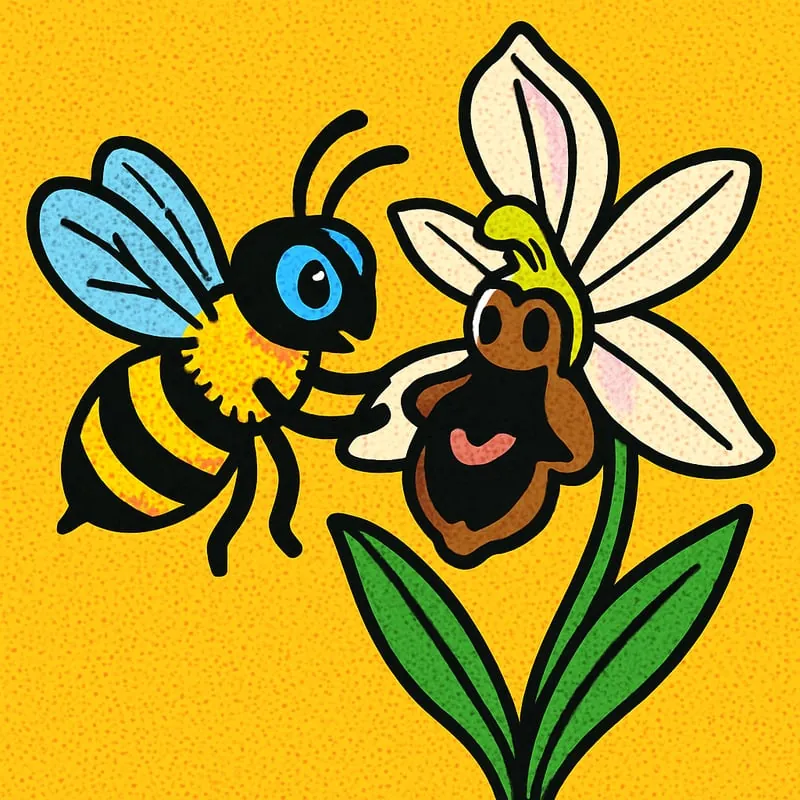
A cartoon bee buzzes excitedly around a bee orchid, which has a face resembling a female bee, set against a bright yellow…
DID YOU KNOW? Bee orchids trick male bees into trying to marry them. The flower looks AND smells like a female bee - confused males try to mate with it and end up dusted in pollen. 2 min read
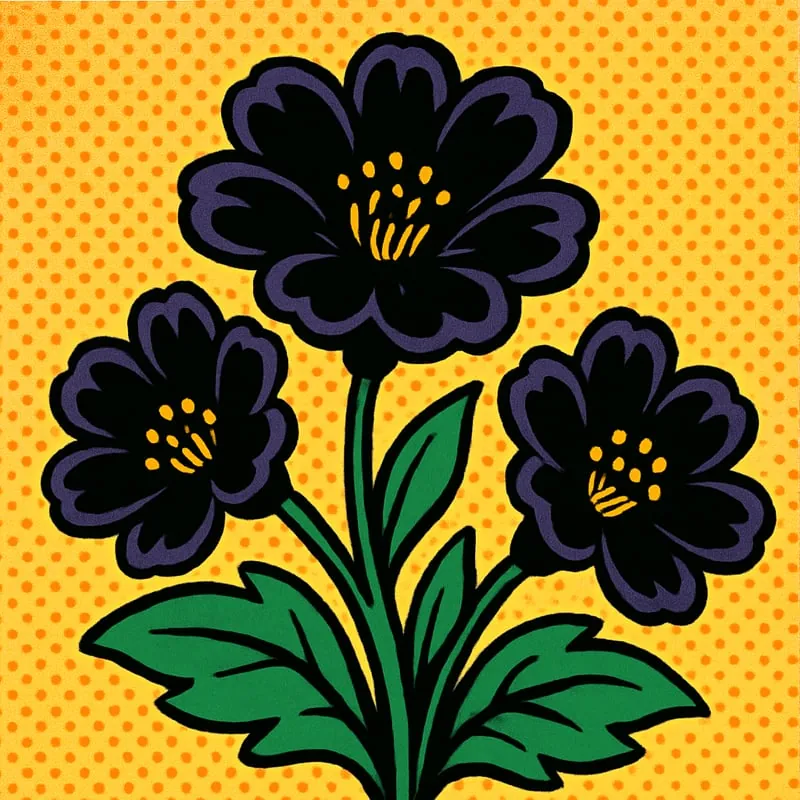
Three bold, dark purple flowers with bright yellow centers bloom against a vibrant yellow polka-dot background.
DID YOU KNOW? Truly black flowers don't actually exist anywhere in nature. The blackest flowers you see are really super-dark purple, red or maroon - there's no real black pigment. 2 min read
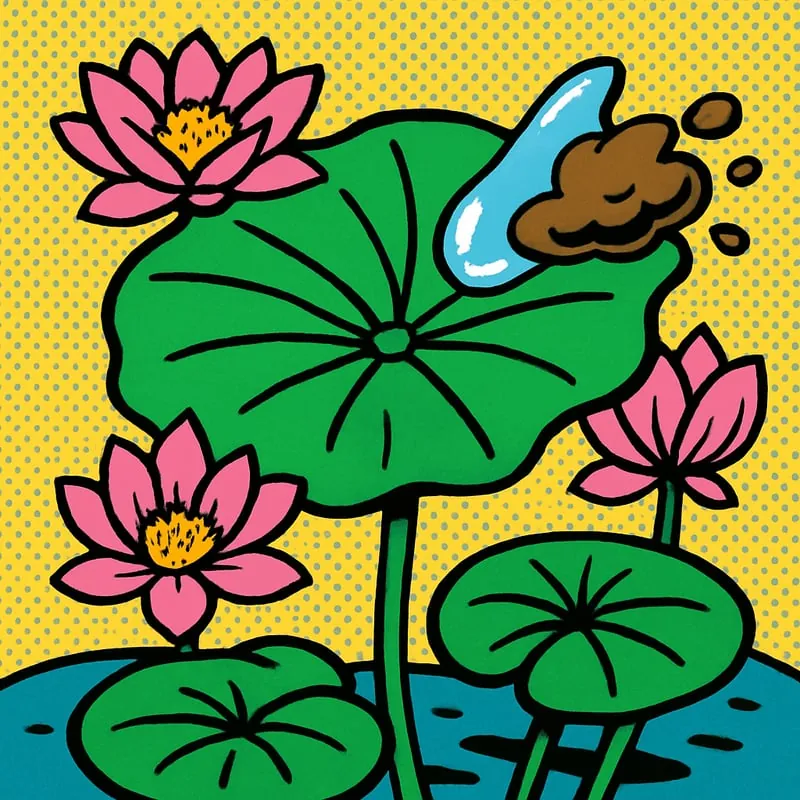
A vibrant green lotus leaf tilts as a droplet of water rolls off, carrying a splash of mud, surrounded by pink flowers.
DID YOU KNOW? Lotus leaves are so waterproof that mud literally slides off them. Each leaf is covered in microscopic bumps that make water roll right off, taking dirt with it. 2 min read
A fuzzy white edelweiss flower stands proudly on snowy ground, with towering blue mountains and sparkling snowflakes in the…
DID YOU KNOW? Edelweiss grows so high in the Alps that the air is thin and freezing. This fuzzy white flower survives where almost nothing else does - by wearing a coat of UV-blocking fluff. 2 min read
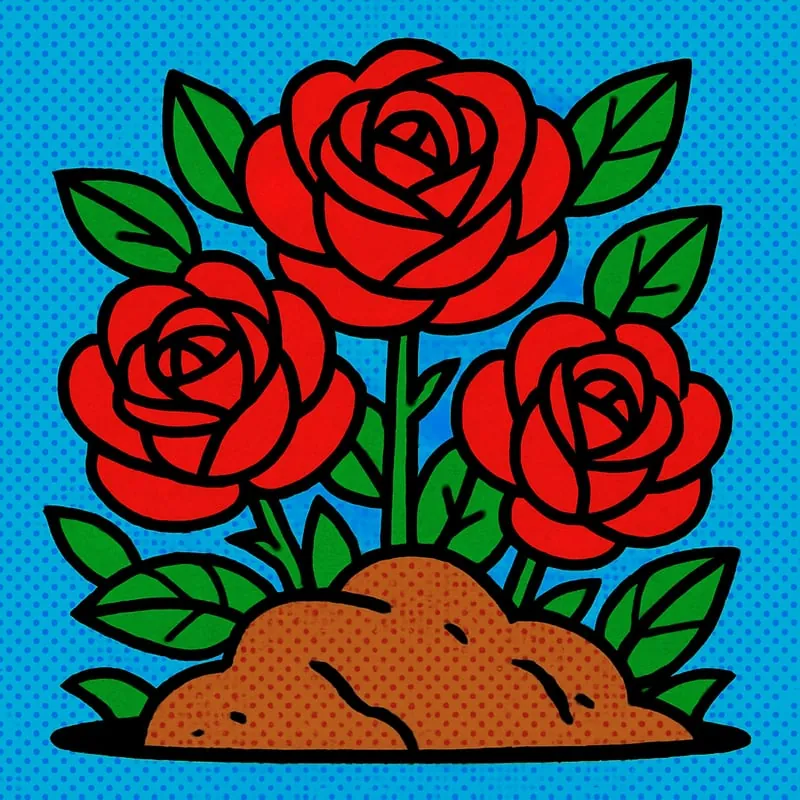
Three vibrant red roses bloom from a mound of brown soil against a bright blue, dotted background.
DID YOU KNOW? Roses have been around for at least 35 million years. Fossil roses have been dug up in rocks far older than the first humans. 2 min read
A vibrant red tulip towers over a small yellow house and a brown tulip bulb, set against a playful dotted background.
DID YOU KNOW? In 1637, a single tulip bulb cost more than a house in Holland. For a few mad months, the Dutch went tulip-crazy - then the whole market crashed in a single week. 2 min read
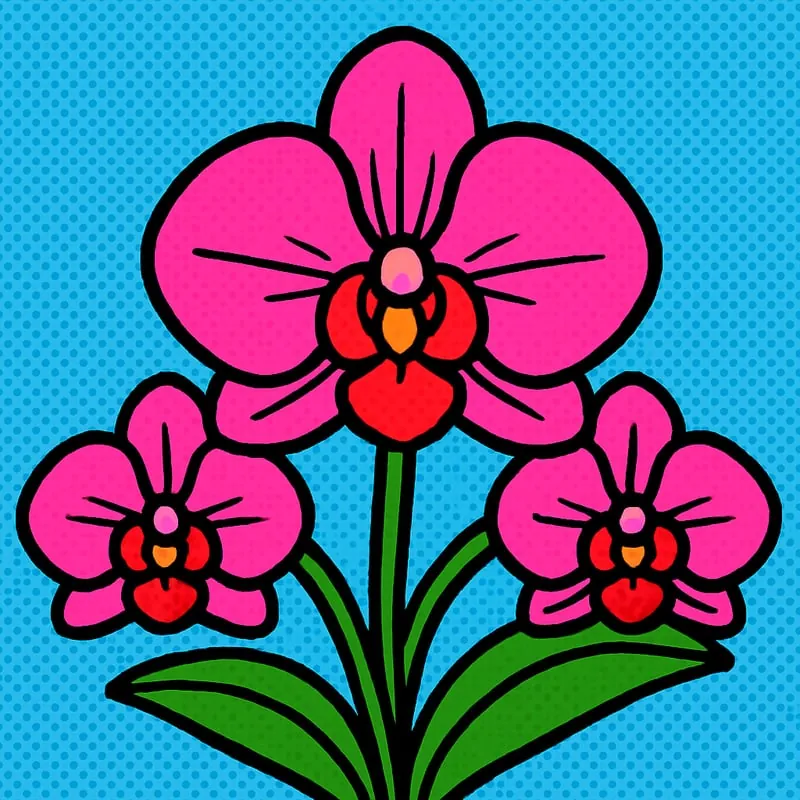
Three vibrant pink orchids bloom with bold petals and cheerful green leaves against a bright blue, dotted background.
DID YOU KNOW? Orchids are the largest plant family on Earth - with over 28,000 species. There are more kinds of orchid than there are kinds of bird and mammal combined. 2 min read
Bright sunflowers with cheerful faces turn towards a smiling sun against a playful blue sky dotted with a fluffy cloud.
DID YOU KNOW? Young sunflowers swivel to follow the sun across the sky. They face east at dawn, slowly turn west by sunset, then swing back overnight - like solar-powered dancers. 2 min read
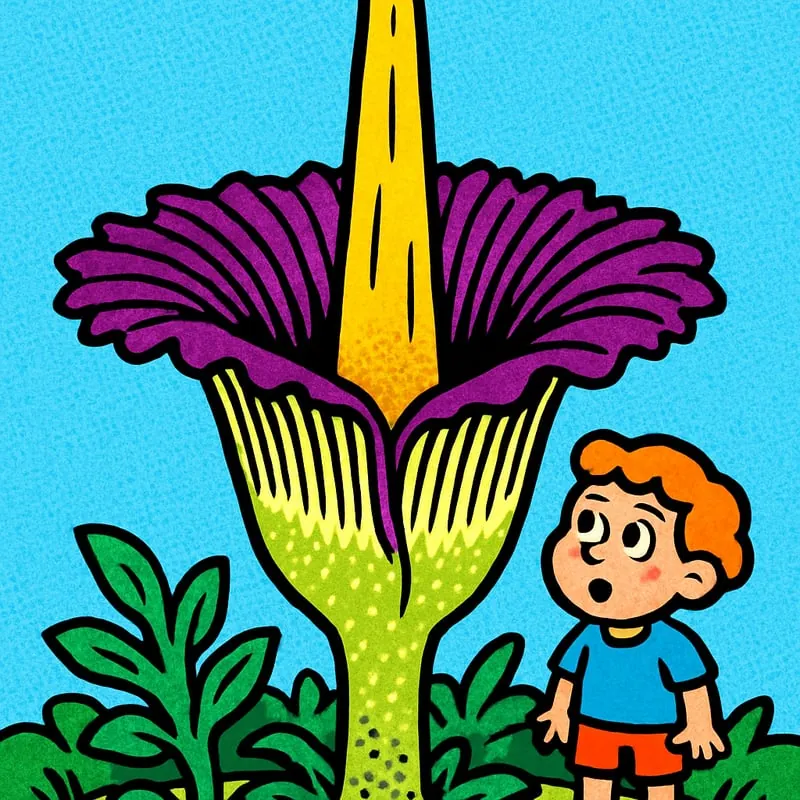
A curious boy in a blue shirt and orange shorts gazes up at a towering titan arum flower, its purple petals wide open.
DID YOU KNOW? The titan arum is called the "corpse flower" because it smells like rotting meat. It can grow taller than a person, blooms once every several years, and only stays open for 48 hours. 2 min read
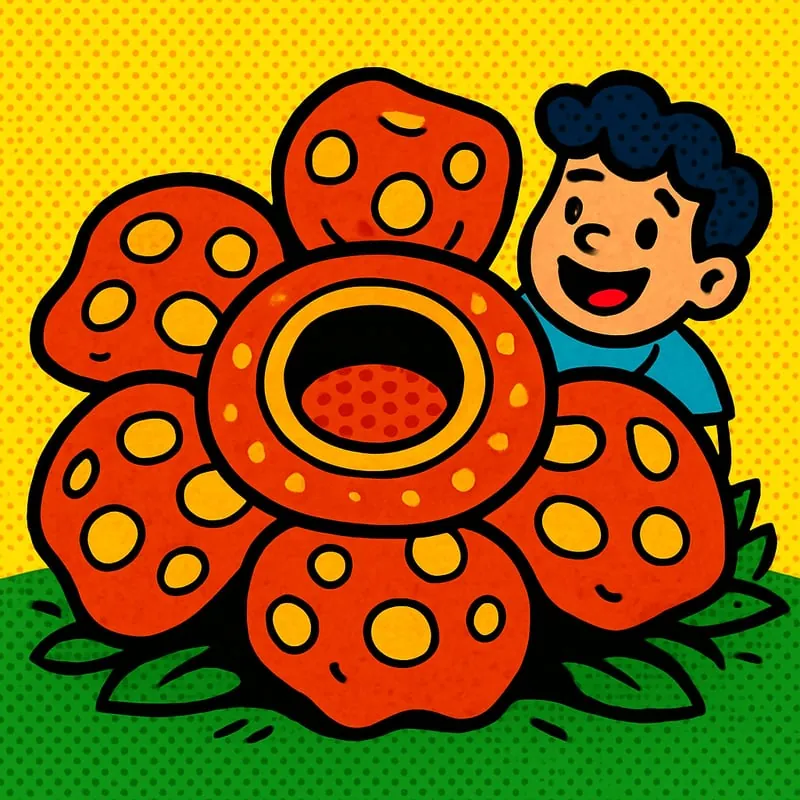
A cheerful boy stands beside a giant, vibrant Rafflesia flower with bold red petals and yellow spots, set against a bright…
DID YOU KNOW? The world's biggest flower can be wider than a car tyre - and smells like rotting meat. Rafflesia has no leaves, no stem and no roots. It steals everything from another plant and just blooms. 2 min read
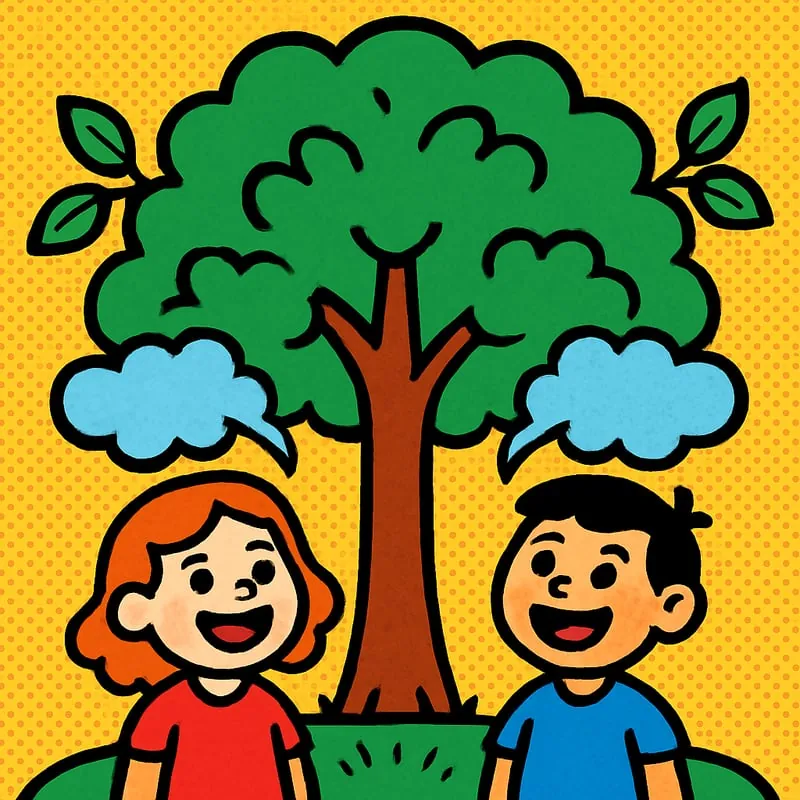
Two cheerful kids stand under a large, leafy tree, smiling and chatting with thought bubbles above their heads.
DID YOU KNOW? A big tree can make enough oxygen for two people to breathe. Plants exhale oxygen as a waste product of photosynthesis - and we'd all suffocate without them. 2 min read
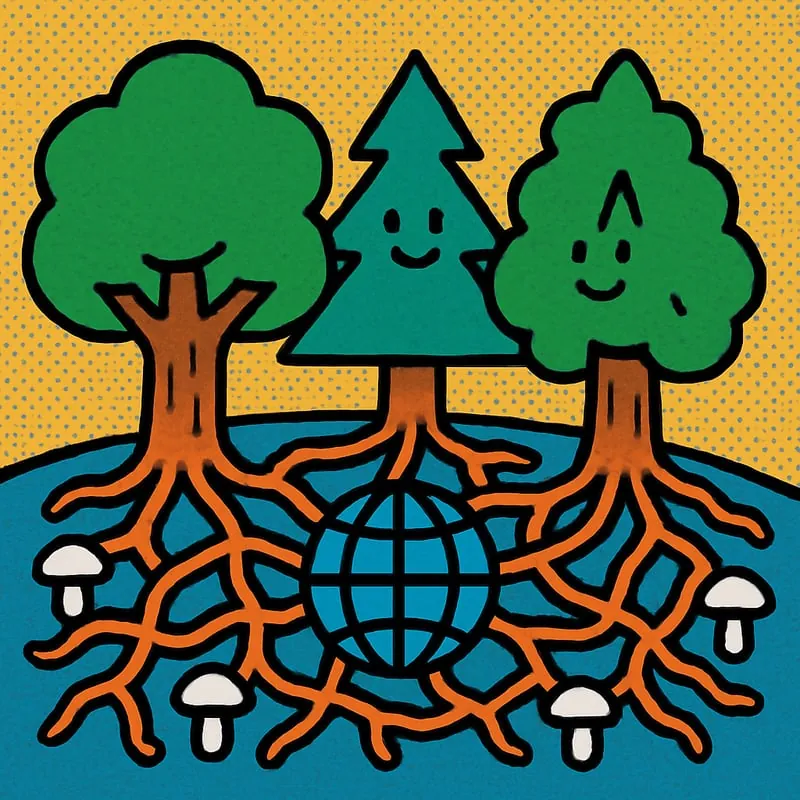
Three cheerful cartoon trees with smiling faces stand on a colorful ground, connected by vibrant orange roots to a globe…
DID YOU KNOW? Trees can send messages to each other through underground fungus networks. A forest is wired together by a secret web of fungi - scientists call it the Wood Wide Web. 2 min read
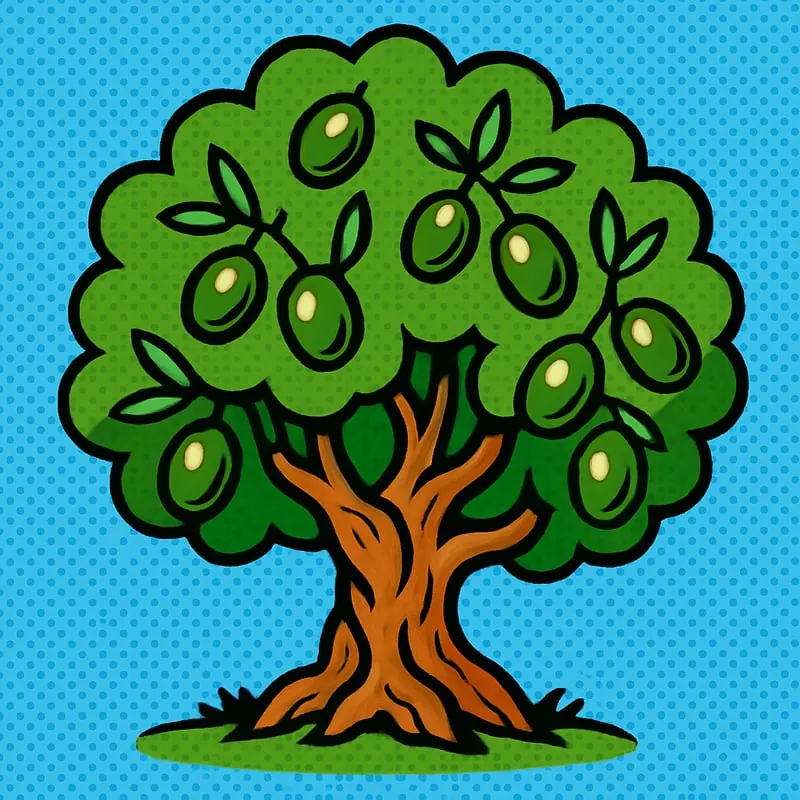
A sturdy olive tree with a thick trunk and vibrant green leaves, adorned with plump green olives against a bright blue…
DID YOU KNOW? Some olive trees are still producing fruit after 2,000 years. A few have been making olives since before the Roman Empire. 2 min read
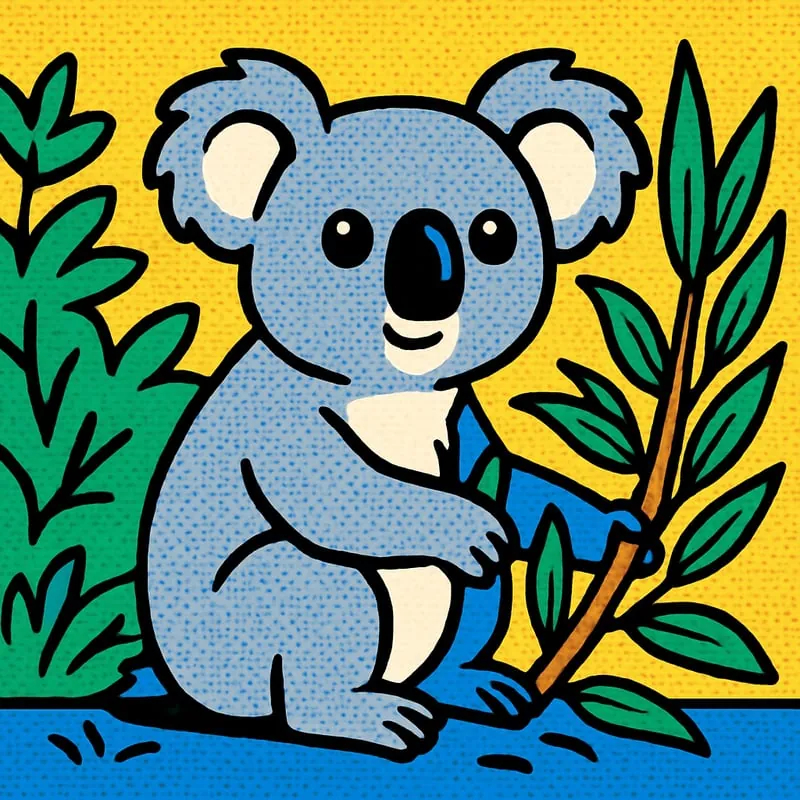
A cute blue koala sits happily, munching on a green eucalyptus branch, surrounded by vibrant leafy plants.
DID YOU KNOW? Koalas only eat eucalyptus leaves - which are mildly poisonous to everything else. Most animals avoid eucalyptus. Koalas evolved a special liver to detox the stuff and snooze 20 hours a day. 2 min read
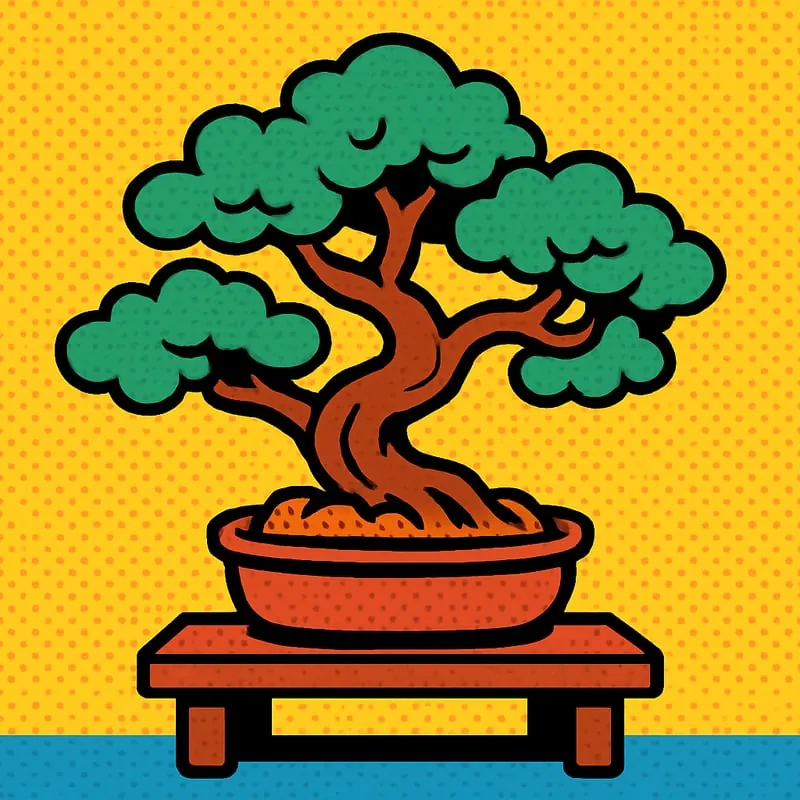
A vibrant bonsai tree with lush green foliage and a twisted trunk sits in a round pot on a wooden table against a bright…
DID YOU KNOW? Bonsai trees can be hundreds of years old and still fit on a table. They're regular tree species - just trimmed and trained to stay miniature their whole lives. 2 min read
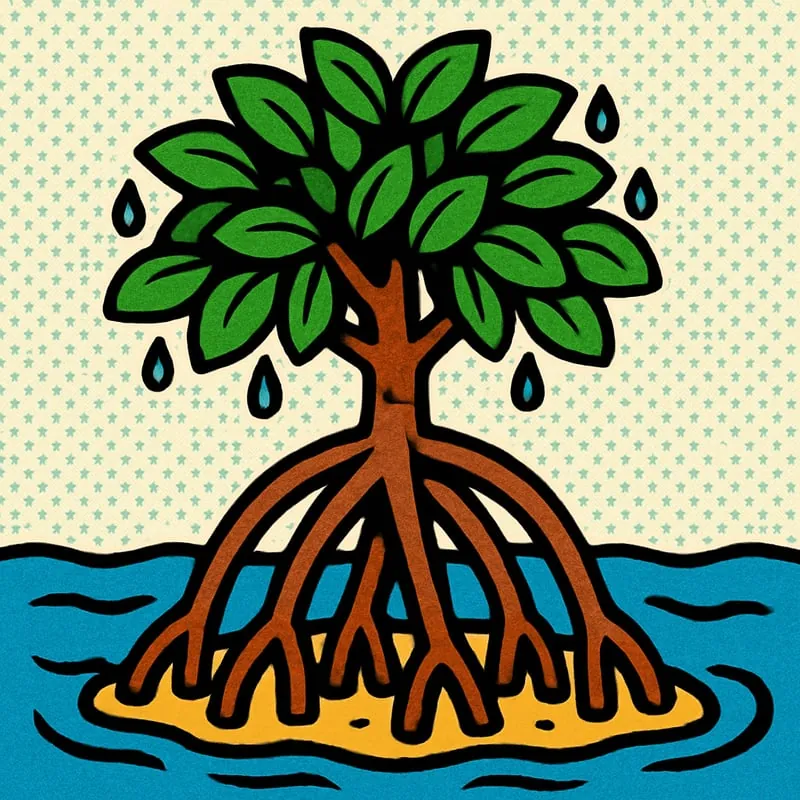
A vibrant mangrove tree stands on a small island, its thick roots submerged in blue seawater, with droplets falling from its…
DID YOU KNOW? Mangrove trees grow with their feet in salty seawater. Most plants would die in seawater. Mangroves drink it, filter it, and even sweat the salt back out. 2 min read
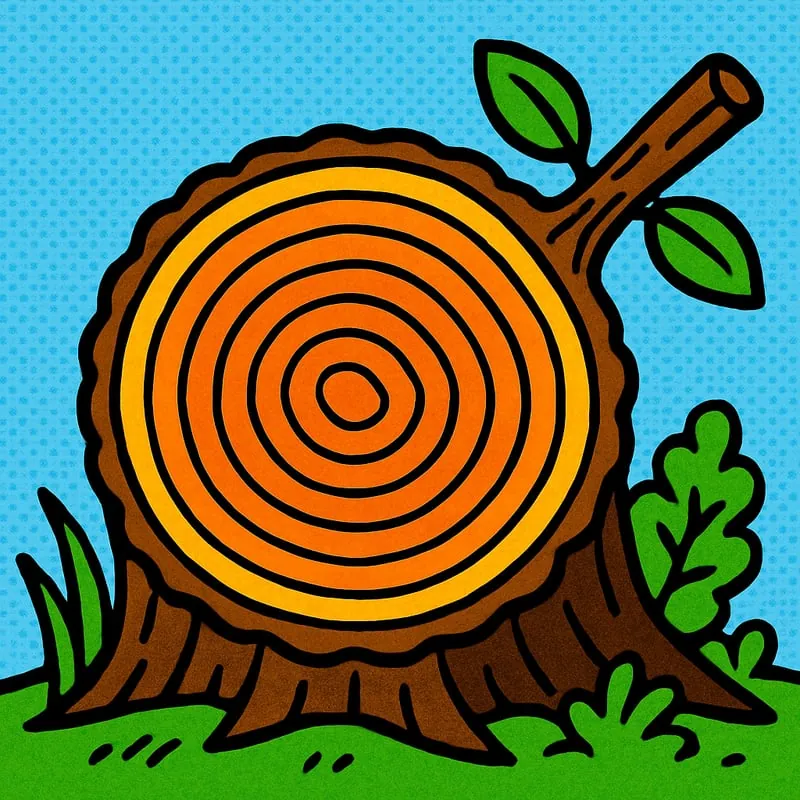
A vibrant tree stump displays concentric orange and yellow rings, surrounded by green grass and leafy plants under a blue…
DID YOU KNOW? Tree rings can tell you what the weather was like 1,000 years ago. Each ring is a year - wide for good years, narrow for harsh ones, and packed with history. 2 min read
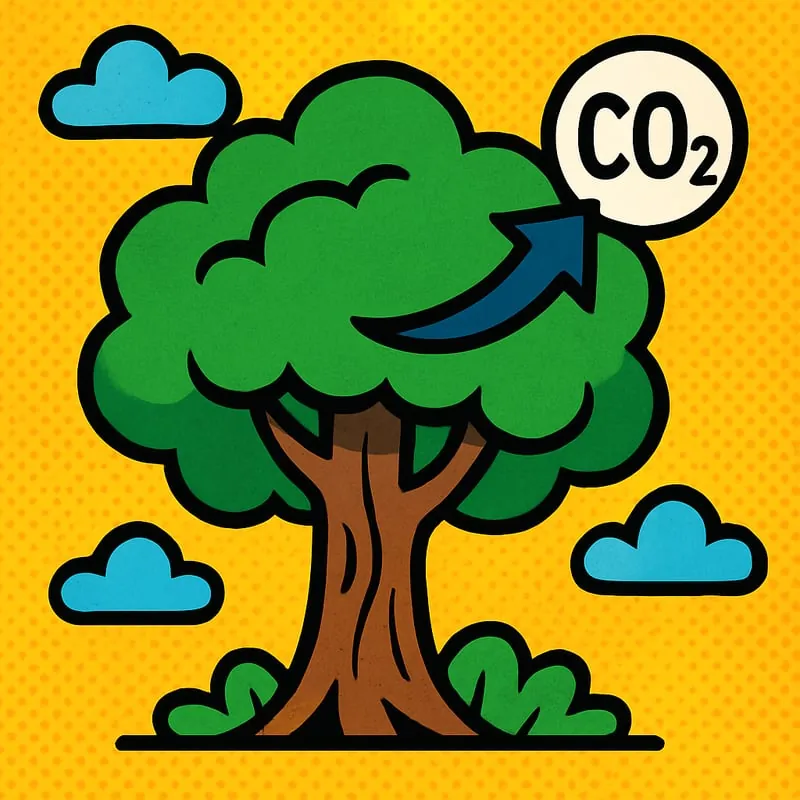
A vibrant green tree with a thick trunk reaches upward, arrows pointing to fluffy clouds labeled "CO2" in a bright yellow…
DID YOU KNOW? Trees pull carbon dioxide straight out of the sky. A single mature tree absorbs around 22 kg of CO2 every year - and locks it inside its wood. 2 min read
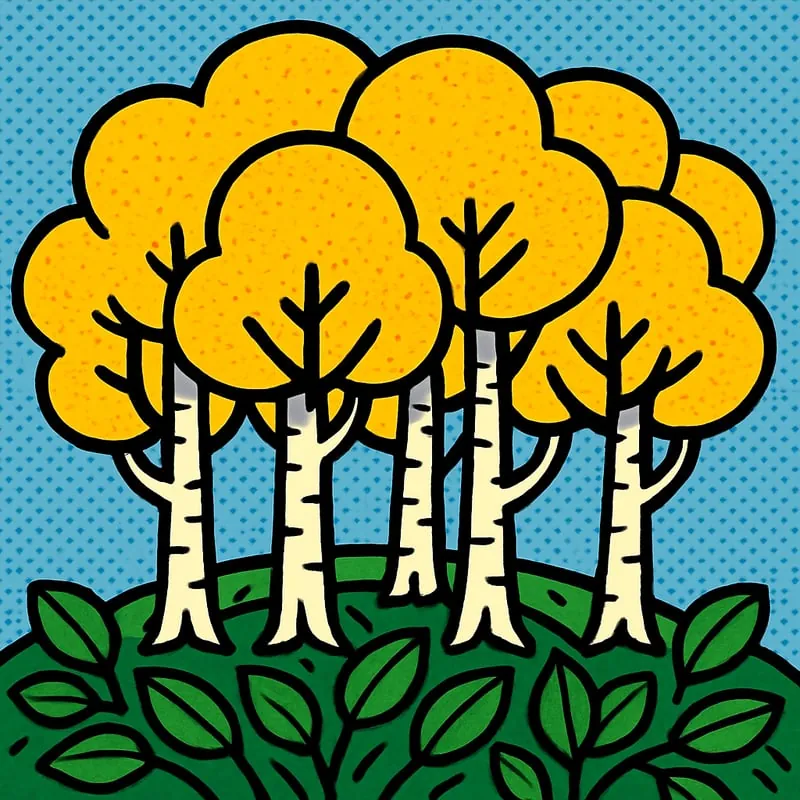
A cluster of bright yellow aspen trees stands on a green hill, showcasing their white trunks against a blue polka-dot sky.
DID YOU KNOW? A forest of 47,000 aspen trees is actually one giant organism. They look like a forest. They share one root system and the same DNA. 2 min read
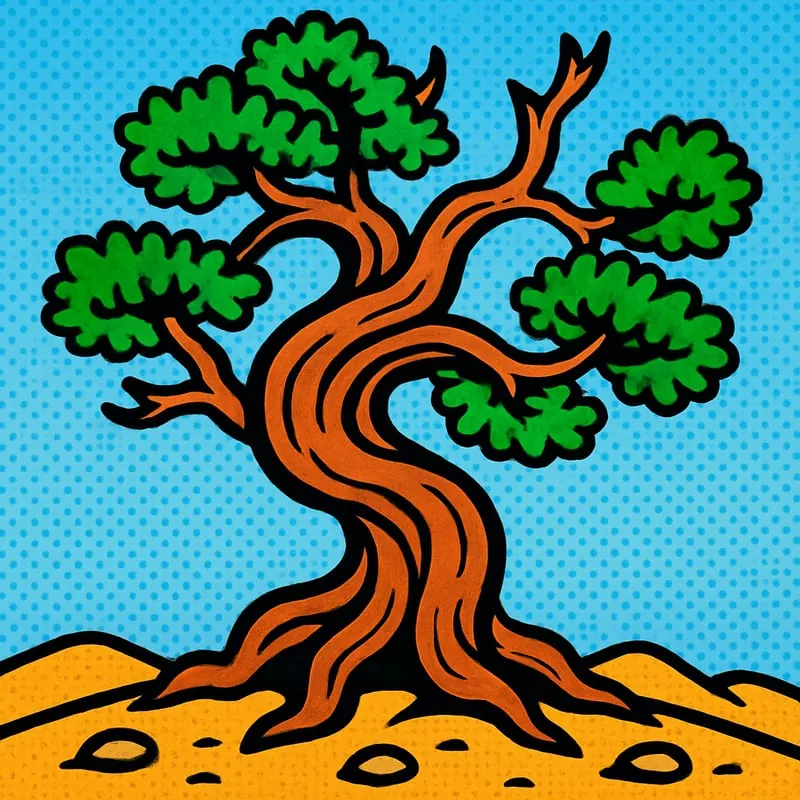
A gnarled bristlecone pine with vibrant green leaves stands proudly against a bright blue sky and sandy ground.
DID YOU KNOW? A bristlecone pine has been alive for almost 5,000 years. This twisty little tree was already 500 years old when the pyramids were built. 2 min read
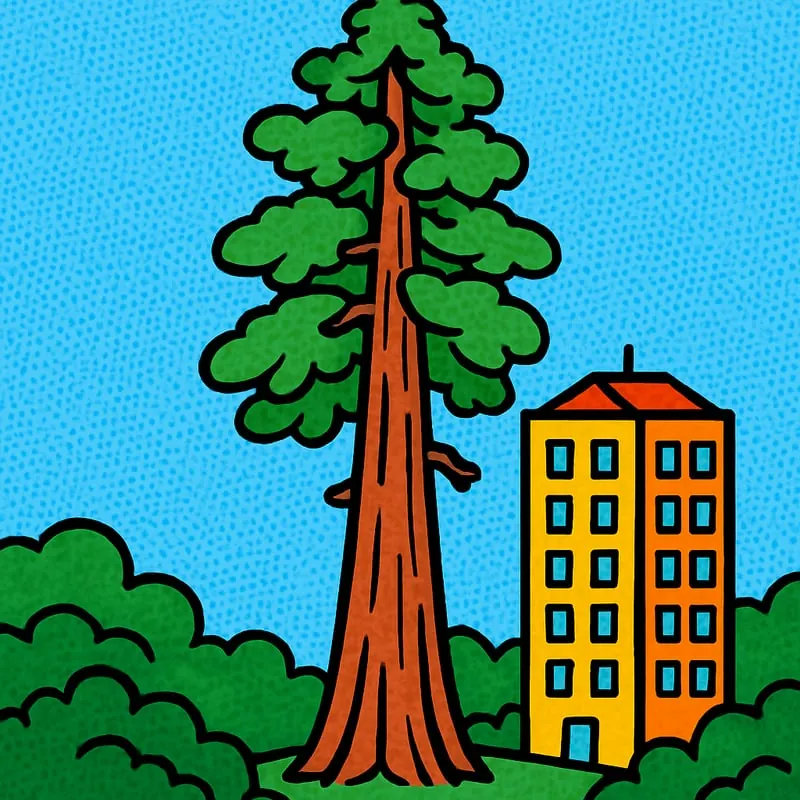
A towering coast redwood stands majestically next to a colorful, cartoonish 35-storey building, surrounded by lush greenery.
DID YOU KNOW? Coast redwoods are the tallest trees on Earth. One redwood named Hyperion is taller than a 35-storey building - and its exact location is a secret. 2 min read
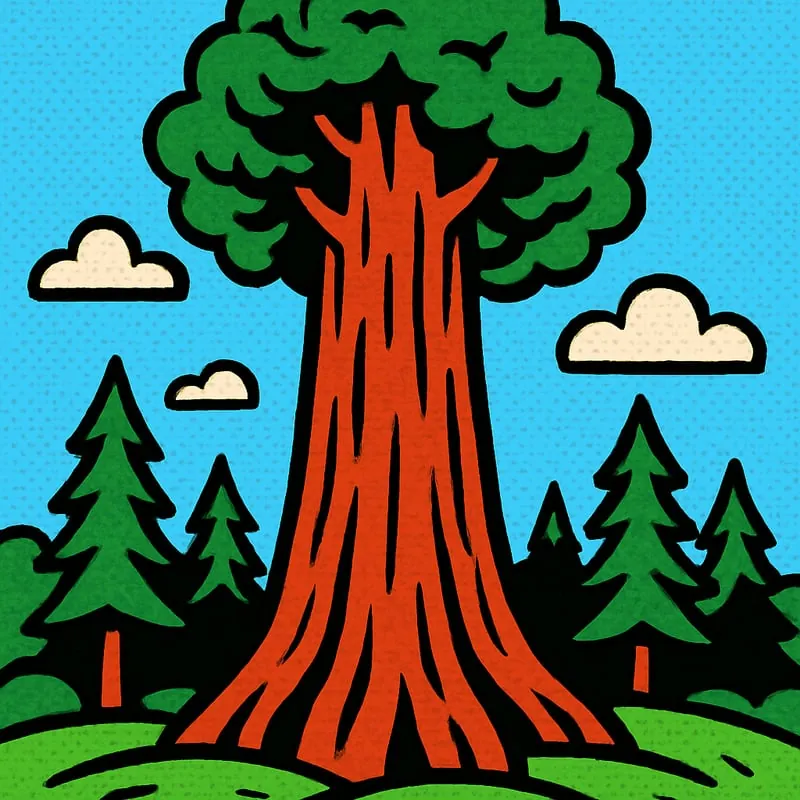
A massive, towering General Sherman tree stands proudly among smaller green pine trees under a bright blue sky with fluffy…
DID YOU KNOW? General Sherman is the single biggest tree alive. This giant sequoia in California weighs about 1,200 tonnes - heavier than 200 elephants. 2 min read
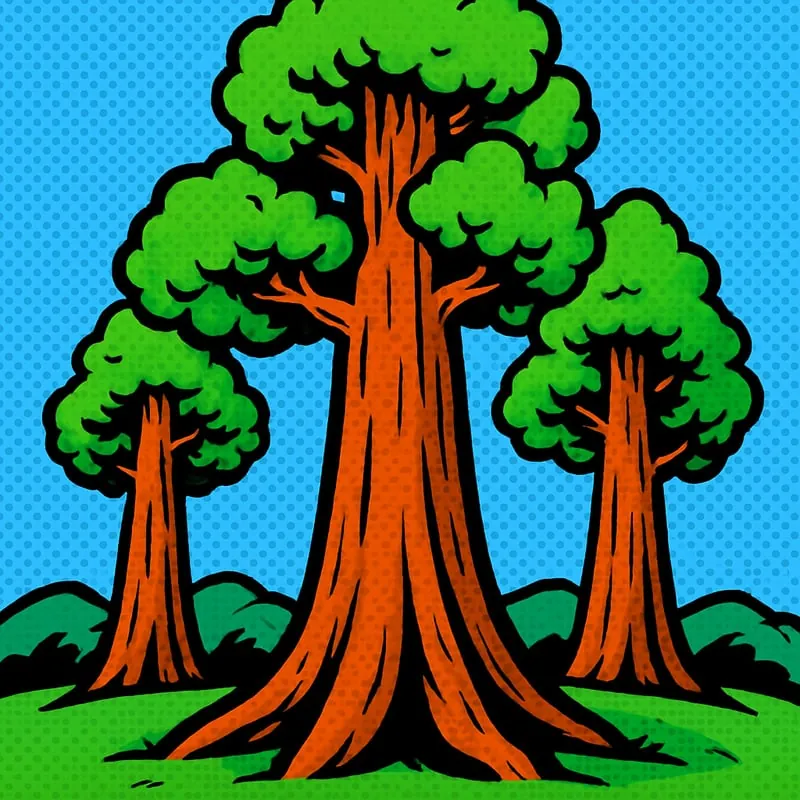
Three towering giant sequoias stretch high into a bright blue sky, their thick trunks and lush green canopies dominating the…
DID YOU KNOW? Giant sequoias are the biggest trees on Earth by volume. They can weigh as much as 30 blue whales and grow wider than a school bus is long. 2 min read

⚡ QUICK-FIRE PLANTS & NATURE WHOAS

60 bite-sized brain-zappers. Click for another.

WHOA!

Roll the dice for an instant whoa.